
Identity-Europe
A Global Take on Children and Screens
How much screen time is too much? Dr Kayleigh Sumner asks better questions instead — what is the screen replacing, and are we connected enough to talk about it. A calm, global view, anchored above all in sleep.
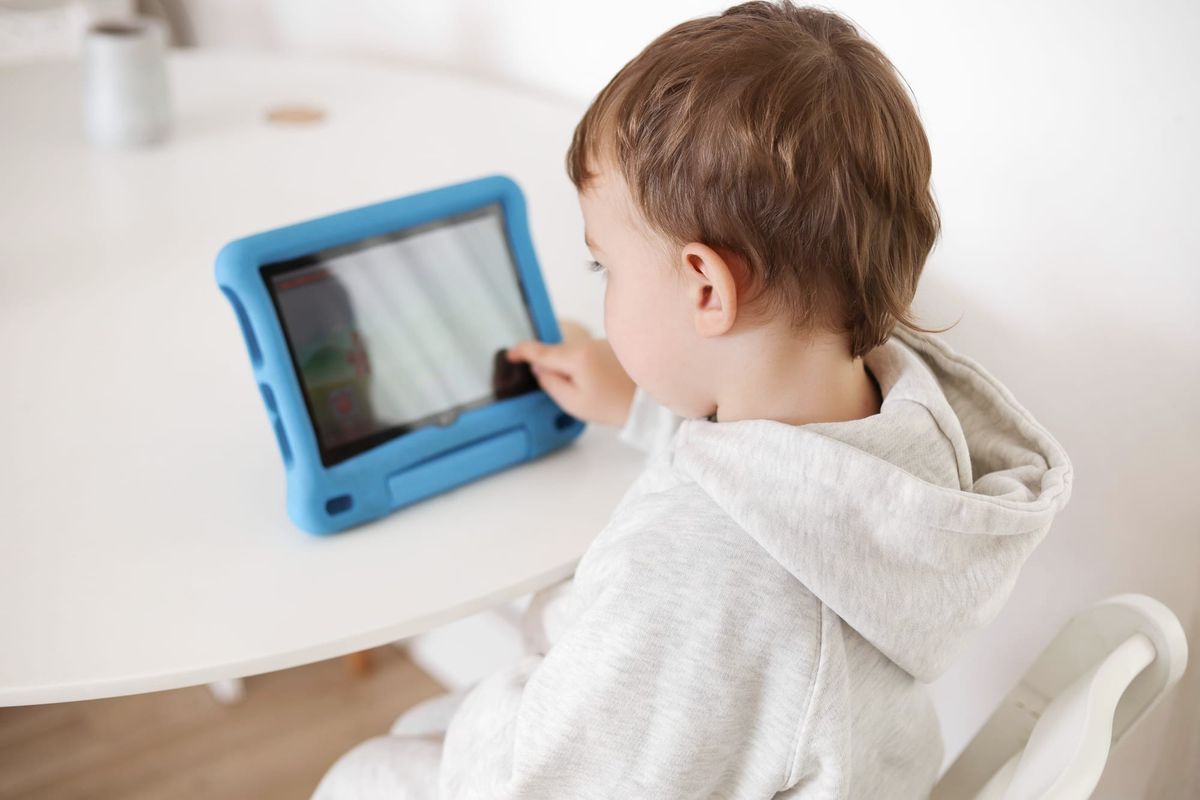
“How much screen time is too much?”
For years, we tried to answer that question with a number. But current research invites us to be more thoughtful than that. For babies and very young children, limits matter, especially when screen use replaces talking, play, movement, sleep and shared interaction. But for older children and teenagers, a question we turn to is: what role is this screen serving in this child’s life?
A recent large study of more than 50,000 children and young people found that higher daily screen use was associated with greater rates of anxiety, low mood, behavioural difficulties and attention-related concerns. An interesting finding, from a parenting perspective, was how some of that risk seemed to travel. It was partly explained by reduced physical activity, shorter sleep and more irregular bedtimes.
In other words, the screen itself is not the whole story. We also need to ask what the screen is quietly pushing out.
Is it replacing sleep?
Is it replacing movement?
Is it replacing face-to-face connection?
Is it becoming the only way a child can calm, connect or switch off?
This is why two children with similar screen time can look very different. A child scrolling alone, late into the evening, is in a very different developmental context from a child who is creating, learning, playing collaboratively or video calling someone they love. The evidence base, and current professional guidance, points us away from panic and towards three steadier questions: what is my child watching or doing, when are they doing it, and are we connected enough to talk about it together?
There is also no single universal picture of a healthy family screen life, something I have seen clearly across different parts of the world. What works in one home, culture or climate may not work in another. A family in Northern Europe may have long summer evenings outdoors and different social norms around a first phone. A family in the Gulf may be navigating extreme afternoon heat, apartment living, international schooling and relatives spread across several countries.
And for many globally mobile women raising third-culture children, the screen is not always a distraction from connection. Sometimes it is the connection. It is the video call that lets a child fall asleep after seeing Grandma’s face. It is the thread that keeps a heritage language alive. It is the cousin, the bedtime story, the shared family joke across time zones.
If there is one place I would still spend your energy, wherever in the world you are raising your children, it is sleep. The evidence here is strong and still growing. Screens close to bedtime can delay sleep, reduce sleep quality and make it harder for children to settle. A tired child’s brain then struggles with the very things we ask of it the next day: focus, patience, learning, flexibility and managing big feelings.
There is also a quiet trap. When children are tired, they often reach for screens even more, because screens are easy, stimulating and immediately rewarding. So the cycle turns. A great deal of what we call “screen behaviour” is really sleep behaviour wearing a disguise.
A few small changes can help
Keep a gentle screen-free wind-down before bed, with devices charging outside the bedroom rather than beside the pillow. Watch and play alongside your child when you can, so screens become a shared world rather than a closed door. Offer a real activity in place of the screen rather than simply removing it. Give a warning before transitions, because being pulled off a screen mid-game can feel as overwhelming to a child as a meal taken away mid-bite. And, hardest of all, let them see us model it too.
One last, gentler point. Heavy screen use can sometimes be a sign that something else feels difficult, rather than a habit to be cut. For many children, especially neurodivergent children, screens can be predictable, regulating, socially connecting and full of genuine joy. But those same children may also need clearer warnings, calmer transitions and more predictable boundaries.
The goal is not less love of the digital world. The goal is healthier habits within it, built through warmth rather than conflict. Understanding what your child is accessing on a screen and open conversations around this is perhaps of most importance.
Recommended Tool: Vitra
Vitra is a project I am personally involved in. My role is to lead the psychological, educational and neurodiversity-informed thinking behind it, while a dedicated technical team builds the app itself.
Vitra is a screen-wellbeing app designed with psychology, education and neurodiversity at its foundation, not bolted on afterwards. It rates the apps your children are actually using across six dimensions of real risk: content, contact, cost, data, dependency and learning value. It eases the dreaded transition off screens with gentle wind-downs rather than sudden stops. It speaks in calm, low-demand language that works for children who take words literally, children whose nervous systems activate fast, and children who worry. And it builds healthier habits across the whole family together, not through surveillance. Because the goal was never to take screens away. It was to make the moments around them work. If you'd like to join us on the journey, you can scan the QR code below to join the pre-launch list.