Science-Nordic
From Architecture to Impact: Designing Safer Communication in Healthcare
Maja Magnusson did not set out to build a translation app. Her path began in architecture, design, consulting and tech — disciplines that all ask a similar question: how do complex systems actually work for the people inside them?
That question would later become central to her work at Care to Translate, a healthtech company built around one of healthcare’s most persistent but unresolved risks: what happens when patients and clinicians cannot understand each other.
Imagine being ill in a country whose language you do not speak, sitting across from a doctor who cannot understand a word you say — unable to explain what is wrong, or to grasp the diagnosis, the risk, or what comes next. In Norway, the patient is, in principle, well protected: under the Interpreting Act (tolkeloven), public services, including healthcare, carry responsibility for using qualified interpreters when needed. Similar principles exist across the Nordic countries, but the catch is access. Interpreters are scarce, booked ahead for planned visits and often impossible to find for the unplanned ones — the night-time emergency room, the ambulance, the weekend ward — or for rarer languages. It is, in short, a problem everyone in healthcare recognises, but no single part of the system fully owns.
That gap — between recognising a problem and taking responsibility for it — is where Maja Magnusson’s story sits. The problem was first named by someone else: while training as a doctor at the Karolinska Institute, Linus Kullänger was placed in a migrant-dense part of Stockholm and saw how routinely, and how dangerously, language failed between patients and clinicians. In 2016 he and fellow students began building an app of medically verified phrases. It was crude, and it spread anyway.
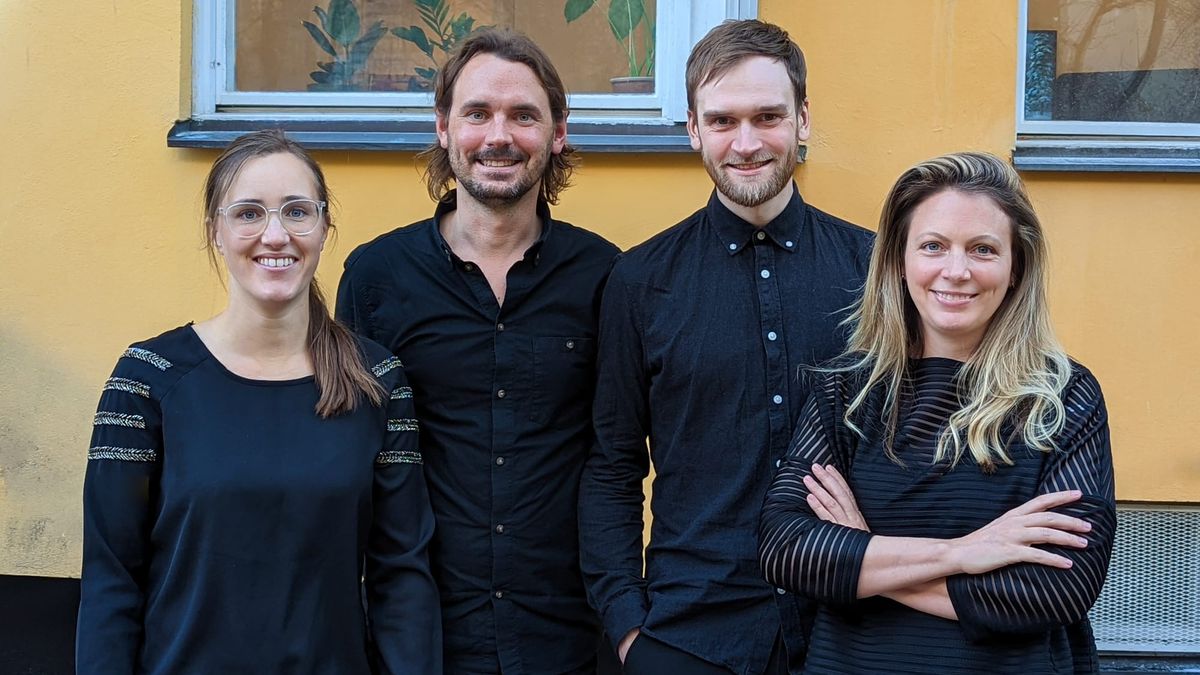
Care to Translate AB was founded in 2018 by Linus Kullänger and Martin Schalling, a physician and professor at Karolinska, with Maja Magnusson and Annie Backman joining shortly afterwards. The founders brought clinical insight; Magnusson, with a background in architecture, consulting and tech, brought something else — she treated the communication gap not as a software problem but as a structural one, and built the tool around how frontline staff actually work in high-stress, rapid-response environments.
That perspective shaped the decision the whole business turns on. Most healthtech startups chase hospital procurement — the slow, top-down sale to administrators. Care to Translate went the other way and gave the tool to frontline staff free. Clinicians adopted it because it solved something in front of them that day, and the demand travelled upward until decision-makers could not ignore it. The reach that followed — the app is now trusted by more than 800,000 healthcare professionals — is the consequence of that choice, not the headline of it.
Whether any of this works is a question best answered inside a hospital. At Oslo University Hospital, Scandinavia’s largest, the critical care nurse and senior researcher Irene Lie — also a professor at NTNU — ran a pilot of the app in cardiothoracic surgery, where a misread sign of arrhythmia or a misjudged level of pain carries real consequences. Lie is blunt about the stakes: language barriers, she has said, are not mere obstacles but potential hazards, and the improvised translations clinicians had fallen back on were both unreliable and, in her word, disrespectful to patients. The early findings were modest but pointed — nurses able to reassure frightened patients they could otherwise not have spoken to at all. The patients who carry the heaviest cost of a language barrier are rarely the ones who arrive already speaking English; they are the immigrants and refugees who share no common tongue with the doctor in front of them, in the moments it matters most.
In 2022, Magnusson stepped into interim leadership of Care to Translate, and in 2023 Kullänger formally handed over the CEO role to her. Under her direction, the company has secured the Athena Prize, the Red Dot Design Award, and global recognition. Care to Translate is now on the World Health Organization's supplier list, with the tool embedded into daily clinical workflows across 51 countries, spanning the Nordics, Europe, North America, Asia, Africa, and Australia.
For Magnusson, the app’s success is a validation of a specific thesis: that large-scale, systemic change in healthcare requires a designer’s mindset — the ability to see the structural flaw, understand the operational reality, and build technology that bridges the gap.
A language barrier in a hospital is not, in the end, the patient's problem to solve at the reception desk. It is a systemic failure — and like all systemic failures, it stays unsolved until someone is willing to own it. That, more than translation, is what the app really demonstrates.
Sources
Interview with Maja Magnusson, conducted by CASI Voice (video call).
Care to Translate — company website (founding history, languages and reach, awards, WHO supplier listing, and healthcare deployments). caretotranslate.com.
Care to Translate — case study, “Improving patient communication in cardiothoracic surgery,” on the pilot led by Irene Lie at Oslo University Hospital. caretotranslate.com/case-studies.
Tolkeloven — Lov 11. juni 2021 nr. 79 om offentlige organers ansvar for bruk av tolk mv. (the Interpreting Act, in force 1 January 2022), Lovdata. lovdata.no/dokument/NL/lov/2021-06-11-79.