
Science-Nordic
Longevity: Our Body Is a Forest. Renewal Is Possible
Our body is like a forest after a fire—it can rebuild itself, if we let it. Liubov Jursiene, a longevity expert, explores what happens when a woman starts running at 45, 50, or 55: how the body changes and what science says about aging cells and bone density.

We are part of nature. Our body is like a forest after a fire — one that can recover if we activate the biological processes within us.
If you decide to start a healthier way of life, know this: it's never too late. It should happen now. When a forest burns, life comes back step by step, tree by tree. That's how living systems work — and that's how we're built too.
What Transformation Looks Like in Practice
Take the typical path of a woman who has never run before and decides to start at 45, 50, or 55.
The first weeks. Breathlessness after three minutes of running, heavy legs, a feeling of "I wasn't built for this." This is normal — the cardiovascular system and muscles haven't adapted yet.
The first 2–3 months. Resting heart rate drops, breathing deepens, sleep improves. The body starts to recognize the load and stops treating it as a threat.
6–12 months. Body composition visibly changes, bones and joints strengthen, and the chronic fatigue once blamed on age begins to lift.
After several years of regular running. Research shows the body functions as biologically younger: longer telomeres, lower cardiovascular risk, stronger bones. The gap between an active and a sedentary body of the same chronological age can amount to years of biological age.
This is the forest after the fire: at first it looks like nothing is growing, and then — a stable, living system that sustains itself.
Why This Matters Especially for Women — at Any Age
A woman's body goes through hormonal shifts men don't experience: pregnancy, menopause, age-related loss of bone density. That's exactly why movement matters for every woman — not just to look toned, but so that bones, heart, and cells age more slowly than the calendar suggests.
And most importantly: it's never too late to start. Studies on menopausal women show improvements in bone density and cardiovascular markers even among those who began training after age 50–60. Regular exercise is also associated with lower cortisol levels, which is linked to better mood and stress regulation — though it's worth being precise here: exercise supports emotional wellbeing, it doesn't guarantee permanent happiness. No lifestyle change works like a switch; it works like training.
We Are Biological Organisms — and Running Slows Cellular Aging. That's a Medical Fact.
A study of nearly 6,000 adults found that women who ran 30 minutes a day, five days a week, had the longest telomeres — the DNA end-caps that determine the pace of cellular aging — in the entire sample. The difference compared with the sedentary group amounted to roughly nine years of biological age.
Running and All-Cause Mortality
A cohort study of more than 55,000 people, followed for about 15 years, found that runners had significantly lower all-cause and cardiovascular mortality compared with those who did not run.
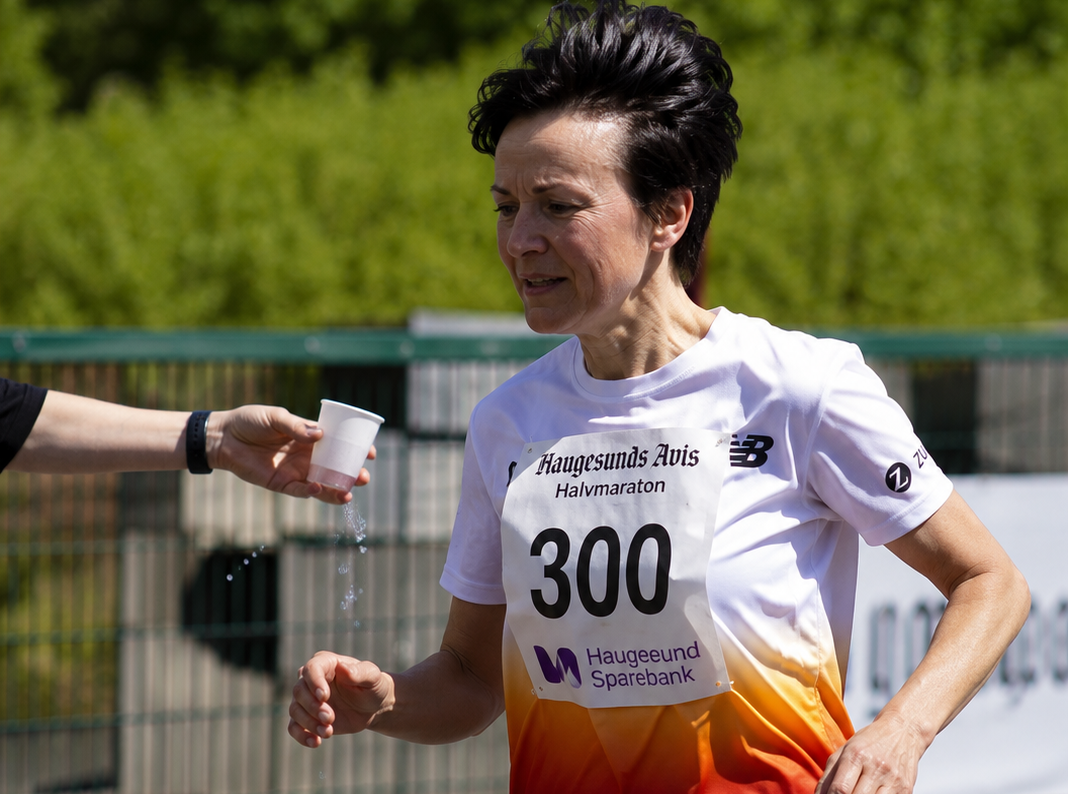
Bone Density, Fractures, and Why This Matters for Every Woman
The biggest enemy of aging well is the loss of bone density — and hormonal changes during menopause accelerate this sharply. That's why load-bearing exercise becomes essential for anyone who wants to preserve their independence with age.
Many of us know a personal story like this: a relative who fractured her hip and, afterward, lost much of her mobility. This kind of injury is often the direct result of years of declining bone density — it's an illustration, not a clinical study, but one many women will recognize.
The reassuring part is what the research actually shows: regular exercise — running included — significantly improves body composition, cardiovascular risk factors, and lumbar spine bone mineral density in women. A meta-analysis of randomized controlled trials confirmed these benefits specifically in menopausal women compared with no exercise at all.
Marathon: Where to Start If You've Never Run Before
Weeks 1–6. Alternate walking and easy jogging — for example, one minute running, two minutes walking, for 20–30 minutes, three times a week. The goal isn't speed — it's building the habit of leaving the house.
2–3 months. Continuous running for 20–30 minutes at a comfortable pace, with one longer run added each week.
4–6 months. Gradually increase your long run by about 10% a week, working up to your first 10K.
6–12 months. A half marathon as an intermediate goal — it gives you the experience of a long distance without the full demands of a marathon.
12+ months. Structured marathon training: long runs, tempo sessions, mandatory recovery days — and yes, massage as part of the plan, not a bonus.
The rule that holds at every stage: progress matters more than pace. A body given time to adapt doesn't break down — it rebuilds itself.
What You'll Get After 5 Years of Running
After five years of regular running, you become a new version of yourself:
- a heart and blood vessels that function like those of someone years younger than your actual age;
- bones that have preserved or increased their density instead of thinning;
- cells that age more slowly — measurably, at the level of telomeres;
- a body that asks for movement instead of resisting it;
- the confidence that age is not a ceiling — just a number that doesn't define what your body is capable of.
A forest after a fire doesn't go back to what it was. It grows denser, sturdier, more alive. The same thing happens to a body given regular movement and time.
Sources
Alexander, J. L., et al. Time Spent Jogging/Running and Biological Aging in 4458 U.S. Adults: An NHANES Investigation. PMC.
https://pmc.ncbi.nlm.nih.gov/articles/PMC10572212/
Latifovic, L., et al. Physical activity and telomere length: Impact of aging and potential mechanisms of action. PMC.
https://pmc.ncbi.nlm.nih.gov/articles/PMC5546536/
Denham, J., et al. Longer Leukocyte Telomeres Are Associated with Ultra-Endurance Exercise Independent of Cardiovascular Risk Factors. PLOS ONE, PMC.
https://www.ncbi.nlm.nih.gov/pmc/articles/PMC3729964/
Lee, D. C., et al. Running as a key lifestyle medicine for longevity. Progress in Cardiovascular Diseases. PubMed.
https://pubmed.ncbi.nlm.nih.gov/28365296/
Chen, Y. C., et al. Exercises improve body composition, cardiovascular risk factors and bone mineral density for menopausal women: A systematic review and meta-analysis of randomized controlled trials. PubMed.
https://pubmed.ncbi.nlm.nih.gov/29579505/
Wallace, B. J., et al. The Role of High-intensity and High-impact Exercises in Improving Bone Health in Postmenopausal Women: A Systematic Review. PMC.
https://www.ncbi.nlm.nih.gov/pmc/articles/PMC9990535/
Crane, J. D., Ogborn, D. I., Cupido, C., et al. Massage Therapy Attenuates Inflammatory Signaling After Exercise-Induced Muscle Damage. Science Translational Medicine, 2012.
https://www.science.org/doi/10.1126/scitranslmed.3002882
Insights into the Anti-Inflammatory Effects of Soft Tissue Manipulation. PMC.
https://www.ncbi.nlm.nih.gov/pmc/articles/PMC12562098/