Culture-Nordic
Female Leadership in Art: A Сonversation with Pernille Gjærder Olsen
Art is not a luxury, argues Pernille Gjærder Olsen. In this conversation, the director of Bærum Kunsthall reflects on leadership, creativity, the invisible burdens many women carry, and why culture remains essential to a healthy society.
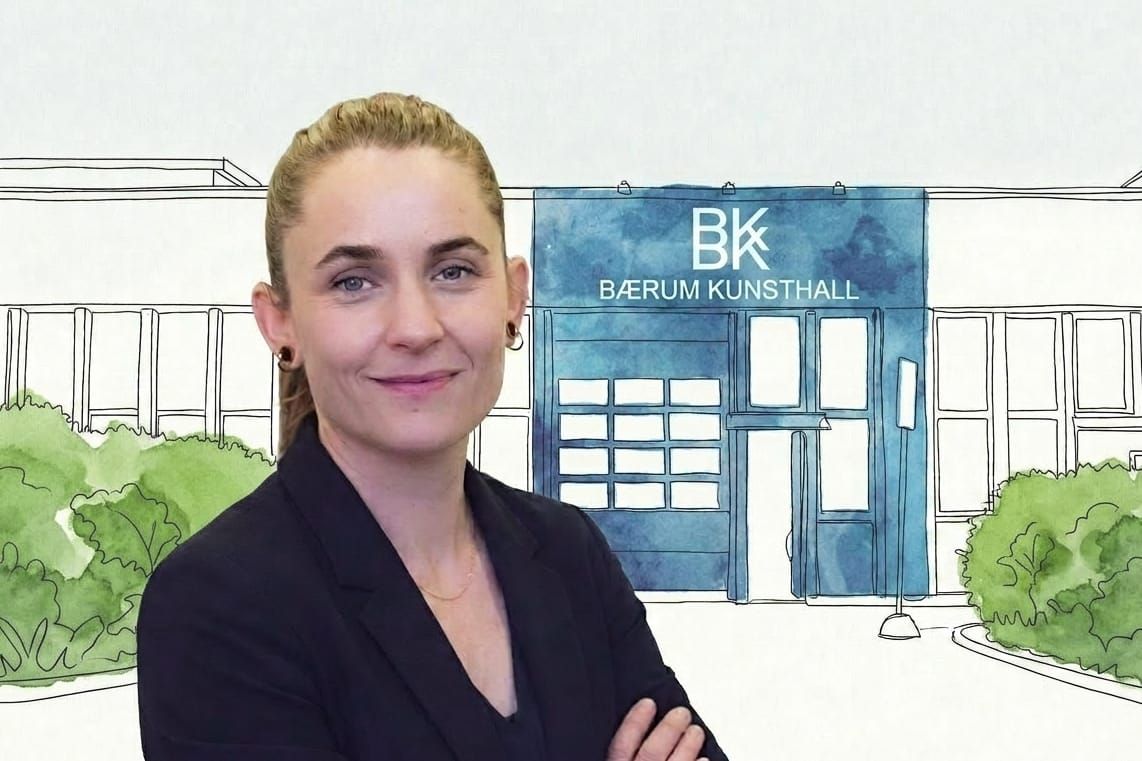
Pernille Gjærder Olsen has been director of Bærum Kunsthall, a publicly engaged contemporary art space just outside Oslo, since 2022. Across more than a decade in Norwegian cultural institutions — including her years heading the Wergelandshaugen art centre — she has done the quiet, behind-the-scenes work of keeping art spaces alive. She spoke to us for our PWN Interview series, published on LinkedIn, about listening as a leadership style, the invisible weight many women carry, and why she believes art belongs far beyond gallery walls.
Growing up, Pernille was a child who loved to draw: "I was always drawing," she says. A Steiner-school education — the Waldorf tradition, which builds learning around art, craft and hands-on making — fed that natural curiosity and creativity. "That curiosity has never left me. We should never lose our ability to remain curious, loving, and creative."
That same openness still shapes how she leads. Ask what guides her decisions and she doesn't reach for strategy — she listens. "What guides me most is listening — to people, to artists, and to the ideas that emerge in dialogue." In the end it is people who interest her: "what drives us, how we make decisions, how we understand society." Artists rarely arrive with answers, she's found; what they offer is different ways of seeing. In a moment she calls full of "too much polarization and too many monologues," that reads less as an art-world worry than a civic one. "If we are only interested in defending our own positions, we lose the opportunity to truly understand each other."
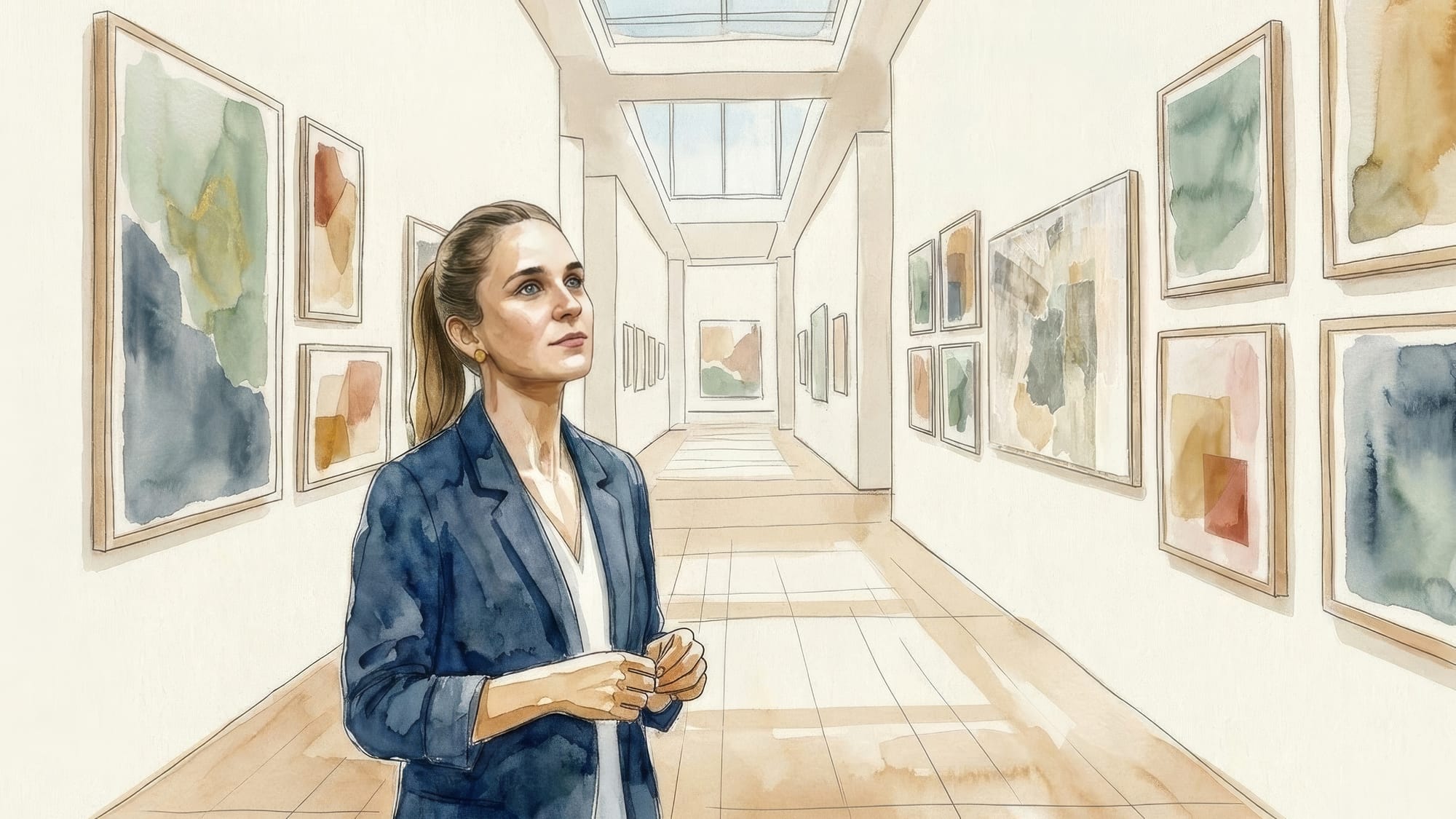
That belief is wired into the institution she runs. Founded in 2014 and set in a converted fire station at Fornebu, twenty minutes from Oslo — skylit halls, rough concrete floors, free to enter — Bærum Kunsthall is artist-run in the fullest sense: it is owned by the local visual artists' association, with artists on its board and the freedom to curate independently. Its exhibition periods are deliberately short, so the programme moves through many artists and techniques, pairing curated shows with others chosen through open calls. The structure is the philosophy made concrete: a house built to listen rather than dictate. It shapes what she wants visitors to feel, too. People often arrive braced, she says, as if understanding were a test they might fail — and she wants the opposite. "I want people to feel free to ask questions, to laugh, to communicate — to have a real conversation."
On women's leadership, she doesn't sugarcoat it. Women don't need to outwork men, she argues; the harder challenge is social — "claiming your space and your right to be there, being taken seriously, being visible." And the gap is not abstract: "If you count the numbers, we clearly don't have a 50–50 balance." She is most candid about the third shift — the mental load carried on top of work and home. "Always holding everything in their head, always focused. It drains you." Her answer is support, and something leadership talk usually skips: celebration. "We need someone who says, 'You're on the right path. I'm here.' And we need celebration — because we've worked hard to get where we are."
There is a real tension in how she describes her own job. Much of her week is budgets, applications, reports, politicians — and yet, she argues, it is precisely this economic lens that is draining art of its life. "We talk about value, funding, and capital, but we forget love." She is unusually equipped to hold both sides: she trained as an artist, with a degree in visual art from Oslo's KHiO, and as a manager, with a degree in cultural leadership from the business school BI — and refuses to treat the two as separate. Mediating between artists, students and audiences, she says, gives her many of the same feelings as making work herself. "I would call it love." The paperwork exists to protect the very thing it keeps threatening to flatten.
Her message to anyone shaping the sector — in Oslo, London or anywhere else — is blunt:
"Follow the art. Give more money to small and medium-sized venues, because that's where art is actually created. Art should even be part of crisis and defence programmes. Because what do we need when we lose hope? We need a different perspective. We need joy. We need inspiration."
She would also put artists where institutions rarely think to look — not only galleries, but schools, workplaces, boardrooms. "Invite artists to leadership seminars," she says. "If you have the right artist in the right place, you get encounters that give you perspectives and ways of thinking you never had before." For a readership of women in leadership, it may be her most practical provocation: the person best placed to unstick a stuck organisation could be the one it never thought to invite in.
She doesn't romanticise the path. It can take ten to fifteen years to make a living, and "you must be prepared to dedicate your life to it." On AI she is measured — creativity, she insists, is necessary in every profession, and the human need for meaning won't disappear, whatever the tools. Her real worry is closer to home: children growing up on screens, with little exposure to materials, craft or critical thinking.
The year ahead is busy — around twenty exhibitions, with artists invited from Turkey, Iran, Serbia, Finland, Russia, Sweden and Norway; "creating dialogue across borders" is the part she likes most. Ask what she'd tell other women trying to find their place, and she returns to support, openness and kindness — and to something underneath them: "Be genuinely interested in what you believe in. Learn both material skills and critical thinking. Art needs people who care deeply — not only about success, but about meaning, responsibility, and humanity."