

GLOBALIZATION – A WORLD WITHOUT BORDERS OR A WORLD WITH GREATER INEQUALITY?
Globalization has connected the world in unprecedented ways, creating new opportunities, technologies, and cultural exchange. Yet it has also deepened inequalities, challenged local identities, and raised urgent questions about how an interconnected future should be managed.
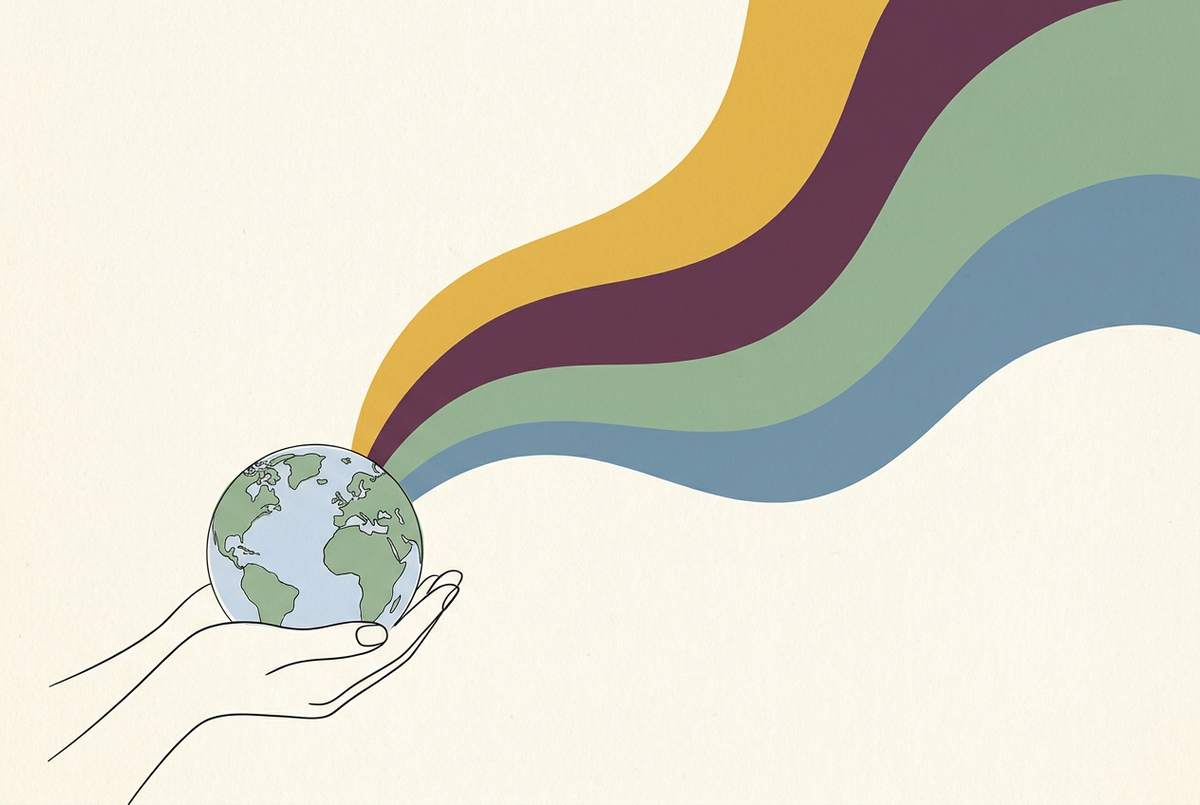
“Globalization divides as much as it unites.”
— Zygmunt Bauman, Globalization: The Human Consequences (1998)
The world has never been more interconnected. Through technology, trade, the internet, migration, and cultural exchange, national borders matter less than they once did. A product may be designed in the United States, manufactured in Asia, and sold in Europe. People communicate across continents in seconds, and news spreads around the world in minutes. For some, globalization represents progress, freedom, and development. For others, it brings inequality, cultural pressure, and a loss of identity. Globalization is therefore not just an economic process, but also about people, power, culture, and belonging. In 2026, that tension feels sharper than ever: many predicted that trade wars and tariffs would end the global era, yet international trade reached a record high in 2025, passing $35 trillion for the first time — a sign that globalization is not disappearing so much as changing shape.
Globalization's advantages
Economic growth and emerging markets
Globalization has many advantages, including economic growth. Countries can trade with each other and specialize in what they do best. This creates jobs, increases production, and raises living standards in many parts of the world. Developing countries have gained access to global markets and seen economic growth. China is a clear example. In just a few decades, the country has grown from widespread poverty into one of the world's largest economies. More recently, as companies redraw their supply chains, connector economies such as Vietnam, India, and Mexico have captured a larger share of global trade — a reminder that the map of who benefits keeps being redrawn.
Technological development
Globalization allows technology and knowledge to spread faster. The internet, smartphones, and digital services have made the world more accessible. Medical research, education, and scientific cooperation now cross borders. The pandemic also showed how global research and cooperation could develop vaccines in record time. Artificial intelligence is the new chapter in this story. In just a few years, hundreds of millions of people have begun using AI tools every week to write, translate, and create. This has collapsed distances that once seemed permanent — though the same technology also concentrates remarkable influence in a few systems, a tension we return to below.
Cultural exchange and understanding
People gain a better understanding of other cultures through travel, film, music, and social media. This exposure can quietly ease unfamiliarity into tolerance across cultures and faiths. Sushi from Japan, tacos from Mexico, and American pop music are now familiar in cities far from where they began. Culture is becoming less something a place owns and more something the world shares.
Better communication
Globalization has made communication easier than ever before. Companies collaborate internationally, families stay connected digitally, and people can instantly share experiences and knowledge. This has also strengthened democratic movements and human rights, as information is more easily accessible.
Globalization’s disadvantages
Increasing economic inequality
Despite the fact that many countries have become richer, not everyone has benefited from this. Globalization can create major differences between rich and poor – both between countries and within societies. Large international corporations earn enormous profits, while many workers receive low wages and face poor working conditions. In some countries, people work under dangerous conditions to produce cheap goods for the rest of the world. The strains of 2025 made this clearer still: as tariffs rose and trade costs climbed, it was the smaller and less diversified economies, with the least room to absorb the shock, that were hit hardest.
Loss of culture and identity
When global trends dominate, local languages, traditions, and cultures may weaken. Many fear that the world is becoming more uniform and increasingly influenced by Western culture, especially American popular culture. Small cultures and minority languages risk disappearing as global corporations and the media gain increased influence. The underlying fear is one of cultural homogenization — that as the same brands, platforms and tastes spread everywhere, the world slowly grows more alike and a little less distinct.
Environmental problems
Globalization leads to increased production, transportation, and consumption. Goods are shipped around the world by ships, airplanes, and trucks, contributing to higher climate emissions. Mass production and high consumption also pressure natural resources, rainforests, and marine environments.
Vulnerability and international crises
The global economy has become increasingly interconnected. When one economy is affected by a crisis, the consequences can quickly spread to other countries. The financial crisis of 2008 showed how vulnerable the global system is. The same happened during the coronavirus pandemic, when factories shut down and supply chains stopped worldwide. The years since have offered a third lesson: Through 2025 and into 2026, tariffs rose sharply and the World Trade Organization’s role in settling disputes was largely sidelined. Companies responded by rerouting supply chains and rebuilding them for resilience rather than pure efficiency. Trade survived — but the era of taking open, rules-based systems for granted appears over.
Globalization from a social anthropological perspective
Social anthropologists examine how people experience globalization in everyday life. For some, globalization provides freedom and new opportunities. For others, it creates insecurity and a feeling of losing control over their society and culture. Globalization affects identity. Many young people today grow up under both local and global influences at the same time. They may listen to Korean music, eat Italian food, and communicate in English, even though they live in Norway. This creates new cultural communities, but also conflicts between tradition and modernity. For anyone who has built a life across borders, that negotiation is not theoretical — it is the texture of everyday life.
There is a deeper irony here. For most of its history, globalization anxiety was that one culture — usually the American one — would overwhelm all the others. The more unsettling possibility in 2026 is that the threat is no longer from any single culture, but from a slow blurring of all of them into one. Cultural difference can no longer be something we simply inherit and defend; increasingly it is something we have to choose, and keep choosing — in the languages we keep alive at home, in the stories we decide are worth telling, in the voices we refuse to let blur into one another. For those of us who live between cultures, that is not only a loss to fear but a quiet responsibility to carry.
The question is no longer whether globalization is good or bad, but how its benefits can be shared more fairly and its costs more responsibly managed. It has lifted millions of people out of poverty, driven technological progress, and connected the world more closely than ever. At the same time, it has widened inequality, strained the environment, and put pressure on local cultures. Artificial intelligence has sharpened both sides of that paradox. It can spread knowledge and opportunity faster than any technology before it, yet the tools, the computing power, and the skills to use them are unevenly shared. A new gap is opening between those who can afford to use AI and those who cannot, and between the countries that build these systems and those that merely use them. The technology meant to carry globalization’s promise further could end up deepening the very divide it was supposed to close.
The greatest challenge in the future may therefore not be whether to stop globalization, but how to manage it. The world needs international cooperation that creates economic growth, but also considers people, culture, and the environment. If 2025 has proven anything, it is that globalization bends rather than breaks. The real question is not whether borders will define our future, but whether we can build a future where connection, collaboration, and shared opportunity matter more than the lines that separate us.