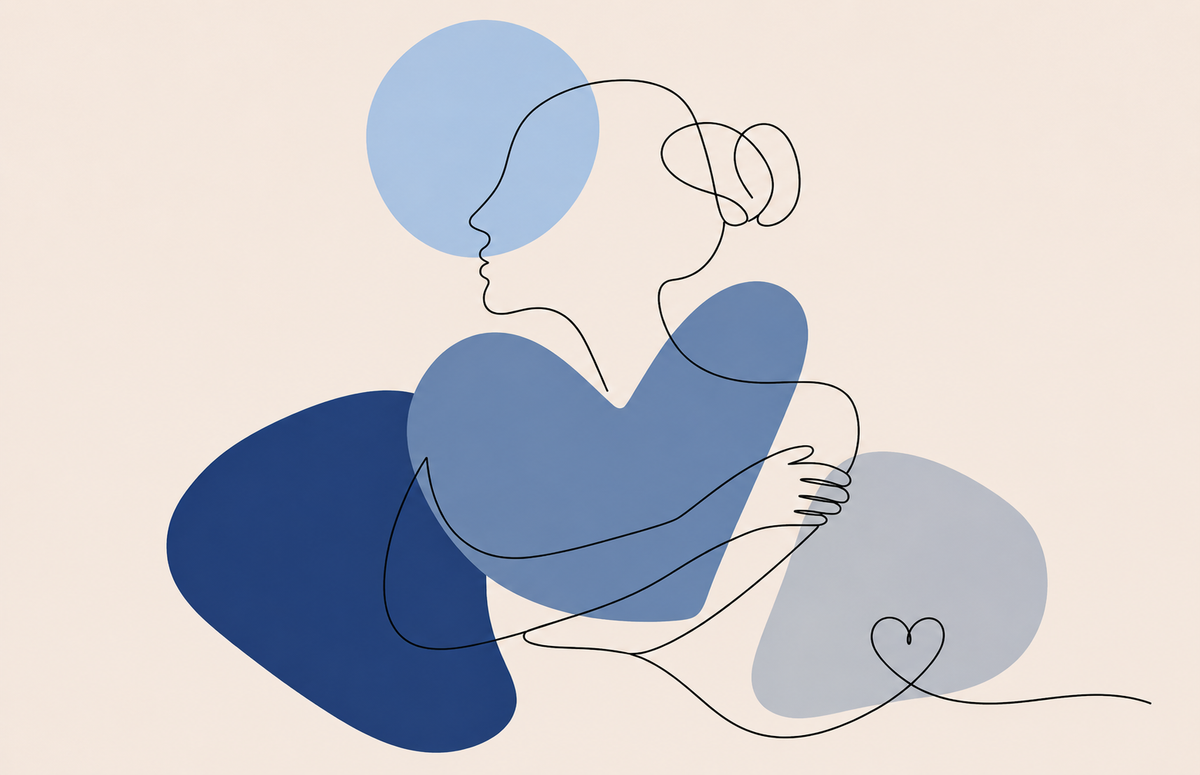
Loving yourself is not the same as being in love with yourself. One is narcissism; the other is the ground every other love is built on
Self-love is easily misunderstood. We tend to hear it in one of two wrong ways. Either it sounds like vanity, as if loving yourself simply means being self-centred, or it shrinks into self-care: a candle, a spa morning, permission to skip the things we would rather avoid. Neither is what the words actually mean.
There are two opposite ways to get this wrong. Narcissists do not truly love themselves; they cling to a grand but fragile self-image that has drifted out of touch with reality. At the other extreme is the person quietly certain they are not worth much, and far too hard on themselves. Both have lost sight of who they really are. Real self-love sits between the two: seeing yourself clearly and honestly, and then genuinely wanting good things for yourself.
It is not the same, either, as thinking you are better than other people. The psychologist Kristin Neff draws the line well: much self-esteem depends on feeling special, on ranking above average, and that need to come out on top can tip into narcissism. Real self-love compares itself to no one. It rests on a simpler idea: that you, like everyone, deserve kindness for no reason other than being human.
Perhaps the simplest definition came from the psychoanalyst Erich Fromm. To love yourself, he suggested, is to treat your own life with the same care, respect and honest attention you would give to someone you love. Love of any kind, in his view, is less a feeling that happens to you than something you practise.
And it matters more than we tend to admit. Love seems to arrive in an order: first a mother's, then our own, and only then love for others. We practise on ourselves first; skip that middle step and later bonds can grow harder, until it becomes oddly difficult to let anyone close. The danger is not that you stay single but that you end up isolated, and long-term loneliness is firmly linked to worse health and shorter lives, on a scale researchers have compared to smoking. Self-love is what makes real connection possible, which is why it is more a necessity than a luxury.
One clear way to break self-love into its parts comes from the writer Sam Vaknin, known for his work on narcissism, who sees it as resting on four pillars, each lining up with long-established ideas in psychology. All four have to be there; three will not hold the weight.
The Four Pillars
I. SELF-AWARENESS
Knowing yourself, and knowing yourself kindly. Not the endless tallying of faults that passes for honesty, but a clear, fair picture of who you are: your strengths, your blind spots, what you are really up against. Much of what we take for honesty is not ours at all: an old voice, a critical parent or a hard teacher, still talking. Self-awareness is learning to tell the difference.
II. SELF-ACCEPTANCE
Taking yourself as you are, with no conditions attached: your character, your temperament, your history. The conditions are the giveaway: "I will be enough once I am thinner, richer, promoted" is not acceptance but postponement. Think of someone who reads a single career setback as proof that they are worth less; self-acceptance is what lets them treat it as something that happened, not a verdict on who they are. As Carl Rogers saw, we can only really change once we stop fighting who we already are. Treating yourself the way you would treat a good friend in trouble tends to make people stronger, not softer.
III. SELF-TRUST
Trusting that you are on your own side, that you will look after your own interests, rather than handing the controls to whoever you happen to be with. When that trust goes, people can disappear into someone else: another person's moods become their weather, until there is no self left to do the loving. Anyone who has left a controlling relationship knows how much work it takes to trust their own judgement again. As Simone de Beauvoir saw, real love takes two people who each remain themselves.
IV. SELF-EFFICACY
The quiet confidence, what Albert Bandura named self-efficacy, that you can decide what you want and actually do it. Not a slogan repeated in the mirror, but something built from evidence: the hard stretches you got through, the choices you made alone, the life you put together. Look back honestly and there is more proof than you credit yourself with. It was not luck, and it was not someone else. It was you.
Why none of this is selfish
There is an old worry that turning toward yourself means turning away from everyone else. It runs exactly the wrong way. In The Art of Loving, Fromm argued that the capacity which lets you love others is the same one that lets you love yourself: the two are not rivals but a single skill. The selfish person, he thought, does not love themselves too much but too little; the grasping self-absorption is an attempt to fill the place where self-regard should be. It is an old idea: Aristotle said the way you treat yourself is the blueprint for how you treat your friends.
The one relationship that lasts
For a long time, the story went that life was a kind of waiting room: somewhere to sit until the person who would complete us arrived. Fewer lives follow that script now, but its real flaw was never about numbers. No one can hand you a self you have not built. The right person can make a good life larger; the wrong one can quietly make it smaller. What self-love changes is your judgement about who to let close: it draws you toward people who meet you honestly, and away from the flattering, one-sided attachments that feel good for a while and then leave you uneasy.
The poet Derek Walcott once described the day you finally meet yourself at your own door and welcome back the person you had drifted away from. Whether you spend your life alone or beside someone you love, you are the one constant in it. Look after that relationship first, and you will have more to give to all the others.
SUGGESTED READING
Erich Fromm, The Art of Loving Kristin Neff, Self-Compassion Carl Rogers, On Becoming a Person Sam Vaknin, The Four Pillars of Self-Love (video) — vaknin-talks.com Aristotle, Nicomachean Ethics (Book IX)