
Achievement-Europe
The Woman Who Made a Home on the Planet Paris
Maria Lund left Denmark with a law degree and a feeling that she wasn't in the right field. Nearly three decades after opening her gallery in the Marais, she reflects on artistic risk, independence and the shifting meaning of home.

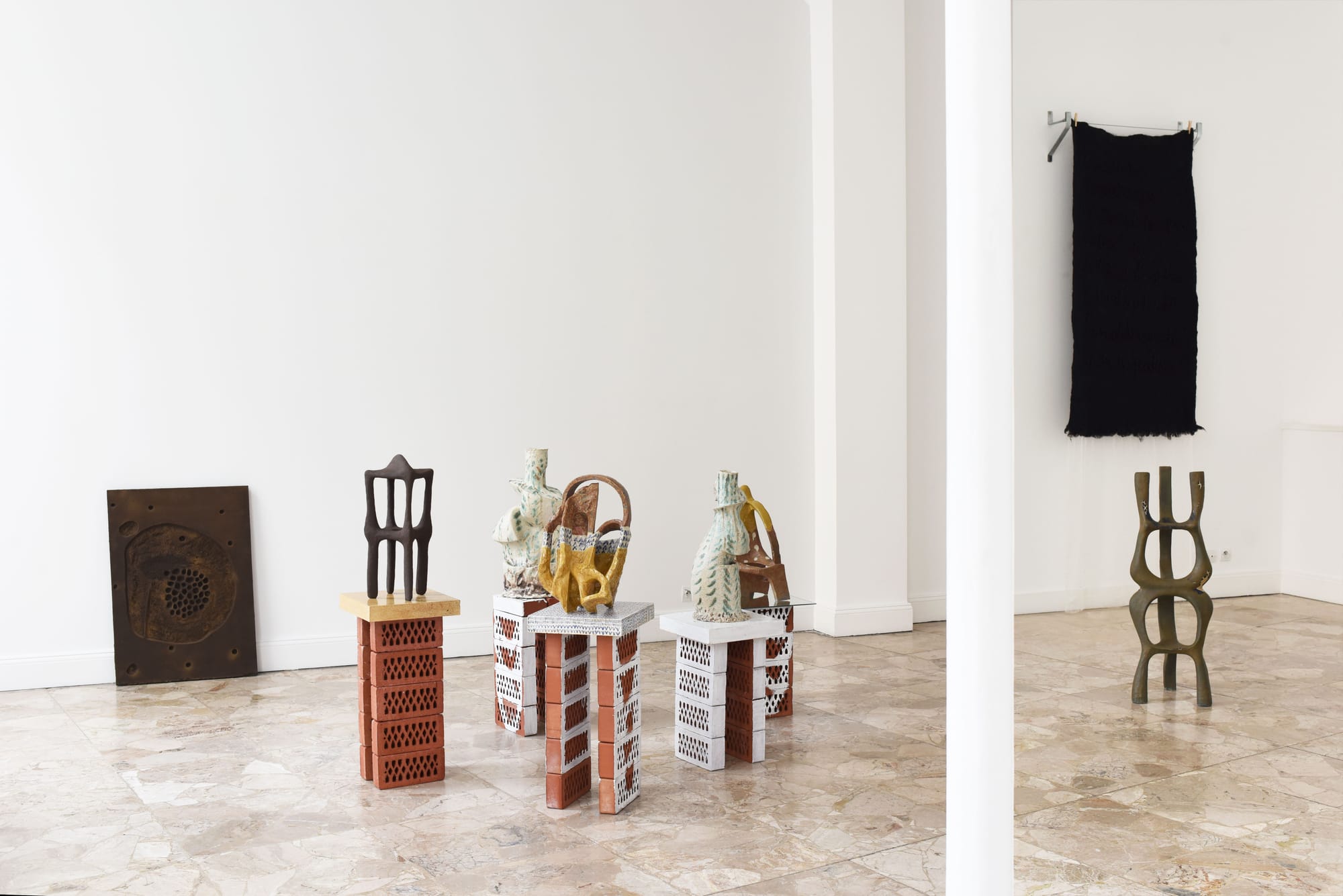
Between the Place des Vosges and the Picasso Museum, Maria Lund’s gallery occupies a quiet corner of the Marais. The neighbourhood around it has grown wealthier and more commercial since she arrived in Paris in 1991, but the gallery remains intimate: a space for artists whose work does not dictate what to think but invites questioning.
“I often refer to Paris as ‘the planet Paris’,” Lund says, a phrase that captures both her attachment to the city and the sense that, although Paris is in France, it is a place of its own with a distinct identity. She is Danish, but after more than three decades abroad, Denmark is no longer quite home. She is established in France, yet still carries the perspective of someone who arrived from elsewhere.
Leaving Denmark
Before she became a gallerist, Lund graduated in law from the University of Aarhus in 1991, but never practiced. Two months later, at twenty-five, she left for Paris.
“I felt that the way of thinking didn’t correspond with my mindset,” she says. “At the age of twenty-five, I didn’t feel I was in the right place. Looking back, I’m grateful to have had this training. Some legal principles and basic insight into copyright law are very useful when running a gallery.”
A risky beginning
Six years later, restless for a new challenge, Lund met a Danish gallerist looking for a partner to open a space in the city. Galerie Maria Lund opened on 11 February 1999. The partnership lasted four and a half years, undone by financial strain and a disagreement over artistic direction.
When it ended, Lund took over the gallery alone, for one symbolic franc, “as we say in France,” and has run it single-handedly ever since. She had not followed the conventional route into the art world, and she has never pretended otherwise.
“It would probably have been wiser to work for another gallery for some years before opening, but this was how it happened,” she says.
Freedom, and a special kind of loneliness
Being foreign, Lund says, has given her something she might not have found at home. “Being a foreigner gives a different kind of independence, but it also brings a special type of loneliness,” she says. “This being said, I find it very stimulating to be in a different cultural and intellectual environment. This big cosmopolitan city offers more space. Here’s a strong foreign presence, and the artistic offerings are vast.”
That same distance has sharpened how she views the art scene she left behind. “In Danish, we have a humorous expression that says somebody is ‘world famous in Denmark,’” she says, a way of naming how a national art scene can produce real quality that never crosses the border. “Every country has its local heroes and heroines,” she adds, “artists who mean something to some of their compatriots but lack the extra dimension that would make them interesting on an international scale.”
The notion of home itself has gradually shifted. “I’ve noticed that I now say ‘in Denmark’ and not ‘at home in Denmark’, ‘hjemme i Danmark’,” she says. “You still belong there, but you’ve changed, as has your home country.”
The work of patience
That outsider’s perspective also shapes the way Lund works, with artists, audiences and the gallery itself.
Lund often describes her role as closer to a gardener’s than a merchant’s. “Building a gallery requires patience. The audience is slow, and working with an artist is about establishing a relationship of confidence,” she says.
For Lund, an artwork grows out of desire and uncertainty. The gallerist’s task is to help the artist stay curious and continue to experiment, to offer attention, support and, when necessary, constructive criticism. “Both the artist and the gallerist are totally free. If I’m not convinced, I have the freedom to say so.”
She has had to learn to meet demanding relationships at eye level rather than retreat from them. “It’s very stimulating and opens my mind. But it’s not an easy process. There are disappointments you have to handle alone, and it’s often tough financially, but if the artist is convincing, you continue to fight for their work.”
What does good art actually do? “It raises interesting questions, challenges our ways of thinking and nourishes doubt. It builds bridges between people, creating the feeling that you are not alone in your emotions and experiences, it makes the world bigger and sometimes beautiful.” Bad art, by contrast, either imposes meaning, “as propaganda art does,” or simply fails to move its audience at all.
A changed neighbourhood
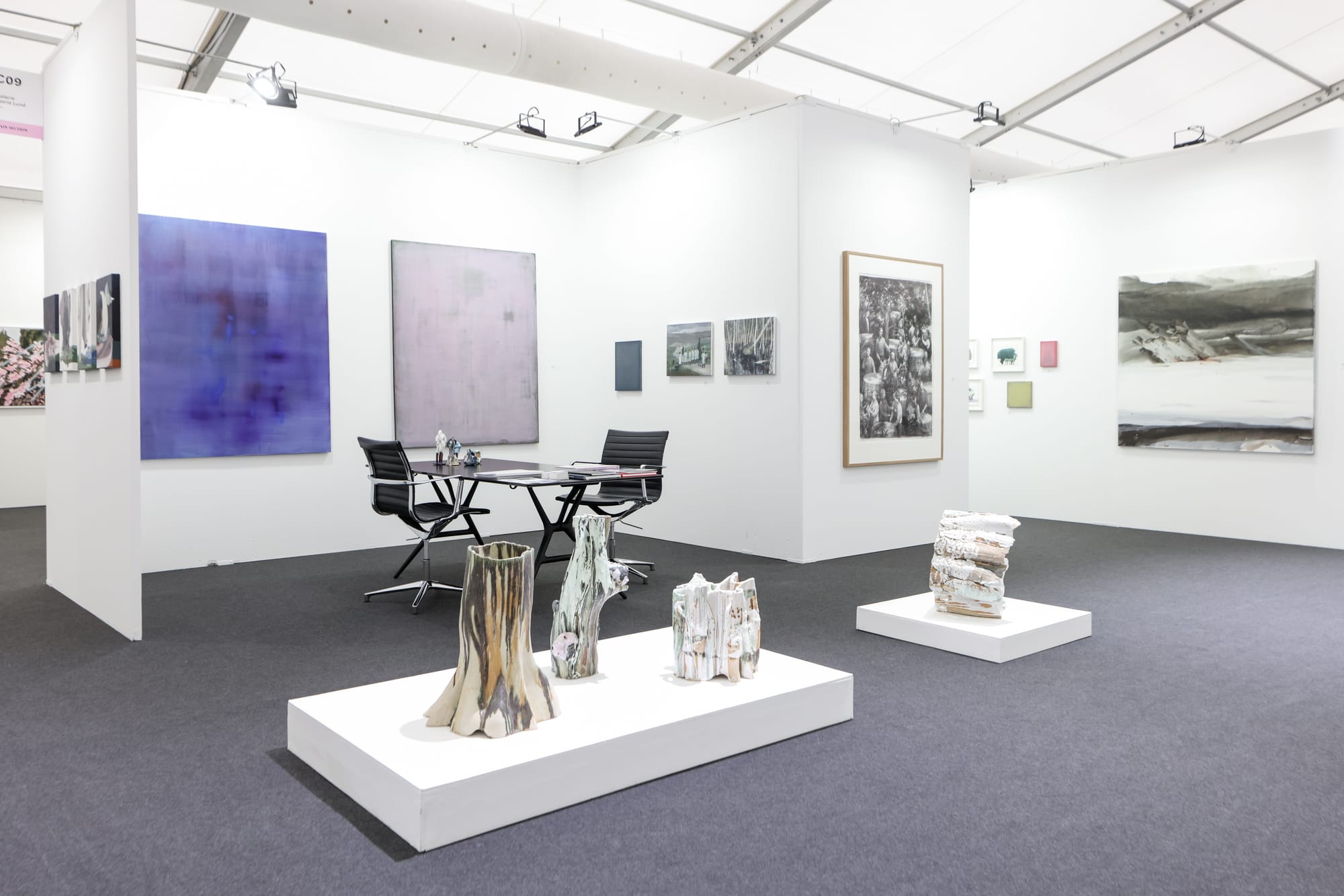
The Marais that Lund entered in 1999 has changed almost beyond recognition. More than two decades of rising property prices have transformed a district once filled with textile wholesalers, workshops and craft businesses into a wealthier, more commercial neighbourhood.
Her own corner has been spared the worst of it. “Where my gallery is located it’s more peaceful yet still very accessible,” she says. “We’re right between the Place des Vosges and the Picasso Museum, overlooking a lovely little park, which gives us some breathing space.”
Three guests at her table
Which three guests would Lund invite to dinner, living or dead? Her choices span contemporary art, literature and philosophy, and she answers without much hesitation. First comes Sheikha Al Mayassa bint Hamad bin Khalifa Al Thani, the Qatari arts patron and cultural leader, admired for her impressive ability to build cultural bridges: she has a deep insight into Western thought while remaining close to her own Oriental culture. Next is Korean novelist Han Kang, for her extraordinary ability to tap into the deepest layers of the human mind and her heartbreakingly sharp descriptions of dark chapters of humanity’s history. Finally, she names Albert Camus, for a unique voice that still stands out with such moving humanity. Lund admires his non-heroic figures and his permanent quest for honesty and nuance, never forgetting his youth in colonial Algeria.
The advice of hindsight
What would the twenty-five-year-old who arrived in Paris with a freshly finished law degree make of her now? Lund’s answer is immediate. “I think she would be glad to see that listening to your subtle inner voice, which you can sometimes barely hear, is a good choice. It hasn’t been an easy path, it still isn’t, but I’m happy that I did what felt right for me.”
She is careful not to claim the credit alone. “We can achieve a lot alone, but being part of a team that produces results is fantastic. In my case, the team obviously includes the artists.”
The wrong bus to Gwangju
Professionally, I’ve traveled quite a few times to South Korea since 2008, a country very close to my heart. During one of my first trips, I decided to go directly from Incheon Airport to the city of Gwangju, which hosts an important art biennale, where I was meeting a Korean artist. I was pretty jet-lagged after the long flight, but I managed to buy a bus ticket, get something to eat, and head to the bus. I showed my ticket to the driver and said “Gwangju.” He nodded yes, and I boarded. It started moving shortly after, which puzzled me a bit since departure was supposed to be slightly later. However, I comforted myself with the idea that the bus left because all passengers had arrived and it was a long trip (about 5 hours). Three hours passed, and I heard the driver say something in Korean. The other passengers started to get up and grab their luggage. A young woman next to me spoke English, and when I asked about the early arrival, she replied that this was the destination. When I insisted on the city of Gwangju, she said, “No, this is Wonju.” I felt a slight panic as I had no clue where I was, but I finally figured out that my approximate Korean pronunciation had brought me to the northeast of Korea instead of the southwest. With the kind help of another English-speaking person—there was only one and I begged him to help—I managed to get a new bus ticket and a hotel for the night. The next morning, I was on another bus heading south. The artist I was supposed to meet was waiting for me at the bus station, and the moment I stepped off the bus, he grinned and said, “Are you sure you’re in Gwangju?”
Maria Lund is the founder of Galerie Maria Lund in Paris, co-founded in 1999 as La galerie danoise with Thorkild NB Nielsen. She has run it independently since 2004.