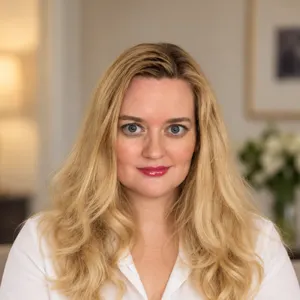
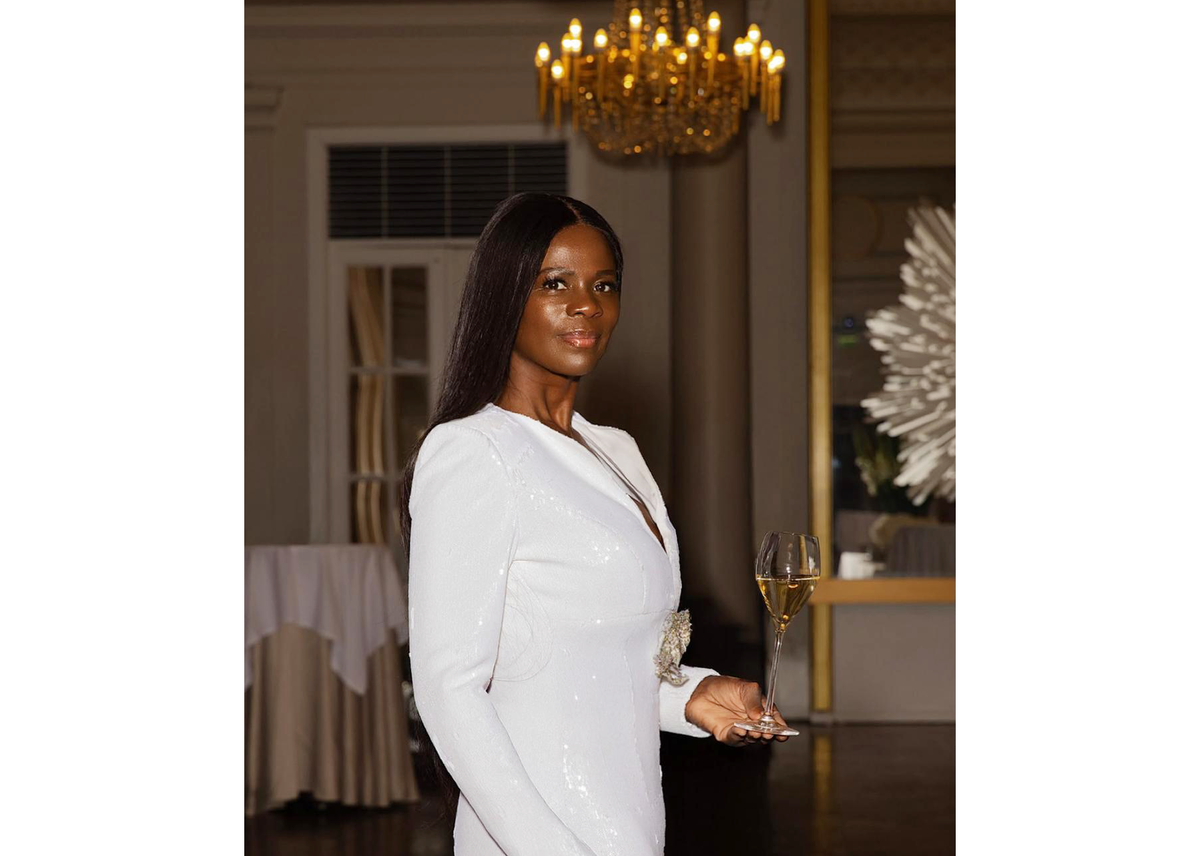
Most champagne houses are handed down from one generation to the next. Yvonne Seier Christensen built hers from scratch. Born in the UK and of Nigerian heritage, she spent twelve years in marketing at Saxo Bank in Copenhagen before deciding it was time to make something of her own. So she went back to school, studied viticulture and oenology at Plumpton College in England, and in 2017 opened her own house in Le Mesnil-sur-Oger, one of the 17 grand cru villages in Champagne.
She named her premium range Les Cinq Filles, after her five daughters. Along the way, she also became co-owner of two of Copenhagen’s best-known restaurants, Geranium and Alchemist. We asked her about being a beginner again, being the only woman in the room, and building something to pass on.
You spent twelve years in marketing at Saxo Bank in Copenhagen, then went back to school to study viticulture and oenology at Plumpton College in England. Why start again, and what was the hardest part?
Twelve years in banking taught me how brands are built, how people decide what to trust and being precise. Meeting and working with so many inspiring people, I reached a point where I wanted to make something with my point of view, my passion which meant something you could hold, taste and share with others.
I've had the privilege of knowing and meeting incredible chefs and sommeliers which stirred my passion for Champagne. I realised that if I wanted to do it properly, I could not simply buy a label and hire people to fill it. I had to understand the vine, the soil and the cellar myself. So I went back to school.
The hardest part was not the science, although there was plenty of it. It was being a beginner again. After years of being the person with the answers, I was the one asking questions, often the oldest in the room, with my hands in the soil and a lot to learn.
In hindsight, it was the best thing I ever did. Being a beginner is what taught me to question how things are “always done.”
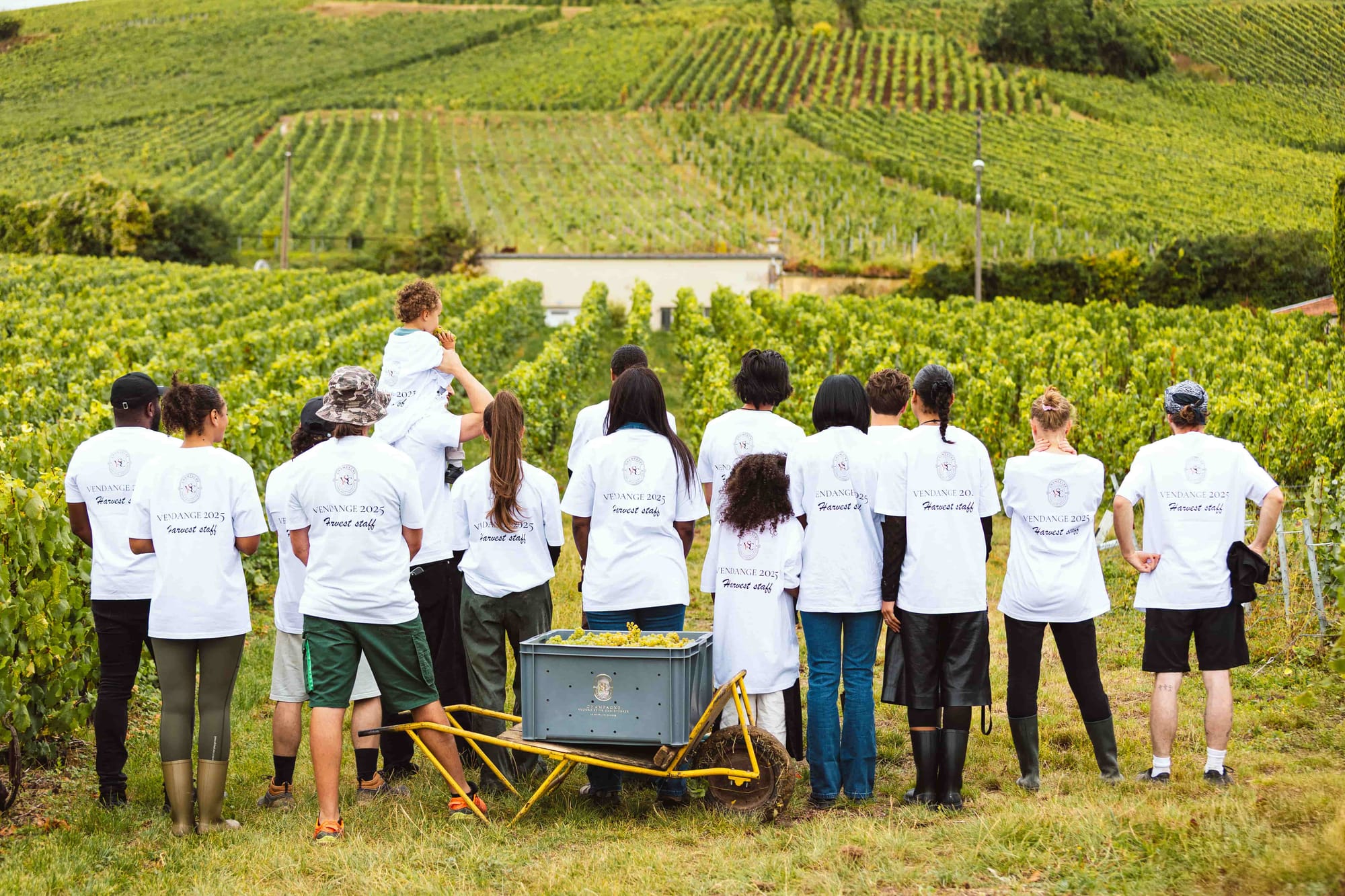
In 2017 you founded your own house in a restored 1879 winery in Le Mesnil-sur-Oger, one of only 17 grand cru villages in Champagne. In nearby Avize, your vineyard is still ploughed by horse. Why was it so important to do it all yourself?
Because in wine, every shortcut shows up in the glass.
Avize is extraordinary ground. It produces some of the most precise, long-lived Chardonnay in the world. When you are given the privilege of working with a place like that, you owe it your full attention.
We plough with horses in Avize because a tractor compacts the soil, and healthy soil is everything. The roots need to go deep into the chalk. It is slower, and it is harder. It is also right.
The winery itself dates from 1879, and restoring it rather than building something new mattered to me. Champagne is a region built on history. I wanted to add to that story, not replace it.
And as a first-generation winemaker, I had no inheritance to lean on. No family house, no name on the gate. The only way to earn a place here was to do the work myself and let the wines speak. And I believe in the concept “you learn by doing”, so all work in the industry I have at least tried once. It is great to reassure juniors coming to work with you: if I can do it, you can do it.
Your premium range, Les Cinq Filles (“The Five Daughters”), is named after your five daughters. The champagnes are organic and biodynamic, made with little or no added sugar, and poured in Michelin-starred restaurants across Europe and beyond. What do you hope the name says about them, and about you as a family?
I hope it says that this is a family house, even if it is a young one.
Every great champagne house began with someone who decided to build something to pass on. Naming the wines after my daughters was my way of saying that this is not a project. It is a legacy.
I also hope it says something about the kind of women I want them to be: independent, curious, unafraid to do things differently.
The wines reflect that too. Organic and biodynamic farming, little or no added sugar, nothing to hide behind. I want them to be honest wines, wines that show exactly where they come from. I would like to think that is a value we share as a family.
How have you managed to raise five daughters while building so many businesses? And do any of them share your love of food and wine?
Honestly? Not perfectly, and not alone.
I have learned that you cannot do everything at once, but you can do everything that matters if you are clear about your priorities. My daughters have always known that they come first, even on the days when the vineyard or the restaurants are calling.
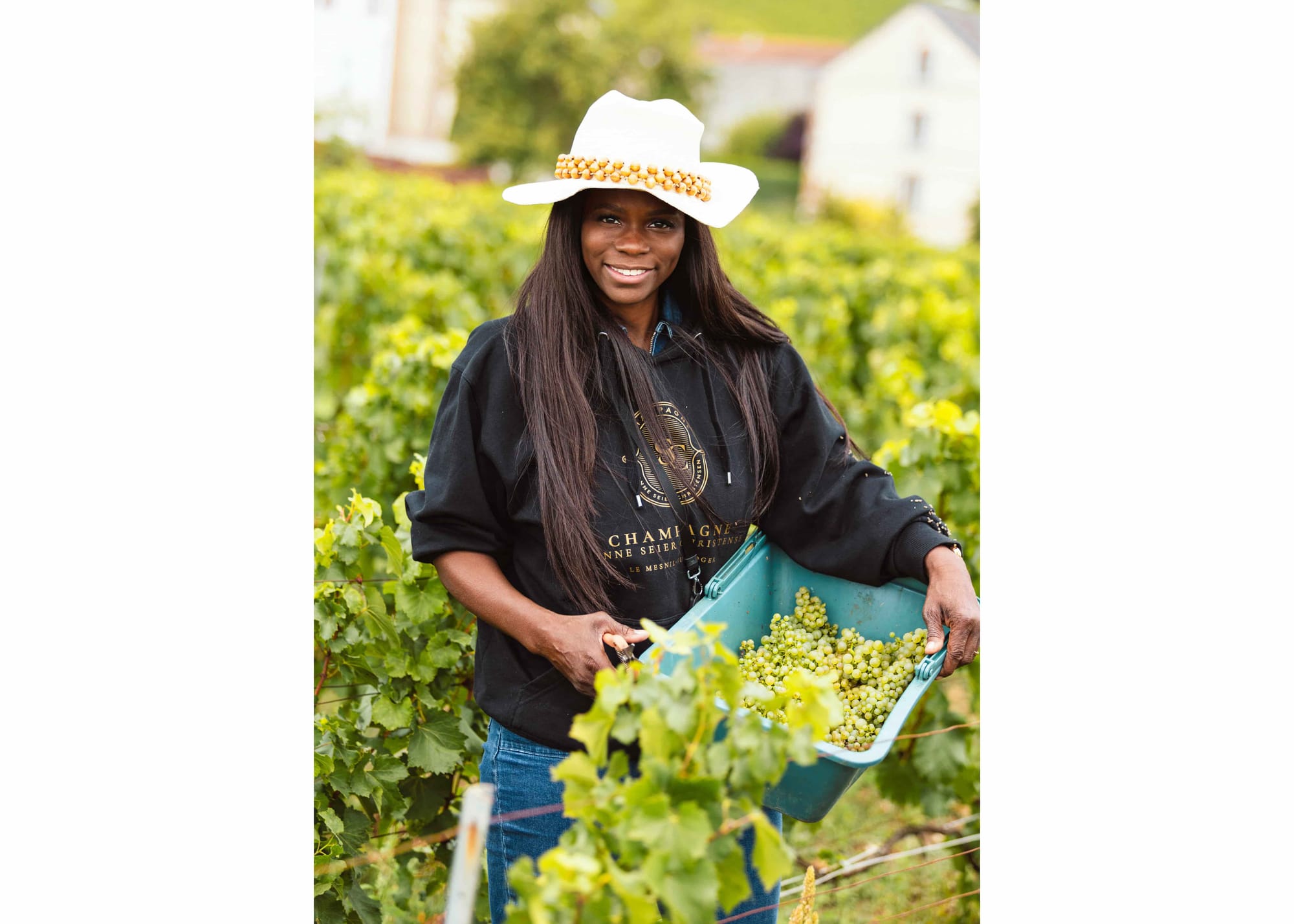
I have also never tried to keep work and family completely separate. They have grown up around kitchens, cellars and harvest tables. And they travel with me and join me when I share our stories and my champagnes in new markets. They are proud to see me pursuing my passion in this chapter of my life and I hope that inspires them to know that anything is possible if they pour their energy and heart into it.
As for food and wine, they all have a great palate, appreciation and knowledge, and our favourite time is to come together over food and wine. They all support me and are involved in their own way. I would never push any of them into the business. But if one day one of them wants to make wine, the door is open, and the vines will be waiting.
In Copenhagen you co-own two of the world’s most celebrated restaurants. Geranium holds three Michelin stars and was named the world’s best restaurant in 2022. Alchemist holds two, and serves a tasting menu of six hours or more, part of it beneath a planetarium-style dome. Two very different evenings. Which one is more you?
That is like asking me to choose between my daughters!
Geranium is precision, calm and nature. Every plate is built with extraordinary restraint, and that is very close to how I think about champagne: nothing unnecessary, everything in balance.
Alchemist is daring. It asks questions, it provokes, it makes you think about food and the world differently. That is the part of me that left banking to plough vineyards with horses.
So I suppose the honest answer is both. Geranium is how I make wine. Alchemist is why I took the risk to make it at all.
What both have taught me is the same thing: the greatest kitchens are obsessed with texture and contrast. That is exactly why I believe champagne belongs with food, not just before it.
Your first business was Club Supercar, Denmark’s first shared-ownership supercar club, and you have often been one of very few women in banking and motorsport. What has being the only woman in the room taught you?
That being underestimated is a gift, if you know how to use it.
When people do not expect much from you, you have room to surprise them. You also learn very quickly to let the results speak, because nobody is going to give you the benefit of the doubt.
It prepared me well for Champagne, which is still a region of old families and long lineages, and still largely led by men. I arrived as an outsider in every possible way.
That is why blind tastings mean so much to me. This year, our Cuvée Les Chapelles Blanc de Blancs Grand Cru 2017 won Gold at The Champagne Masters, and our Rosé de Saignée 2012 was named Grand Master at The Drinks Business Global Rosé Masters, both judged blind by Masters of Wine. In a blind tasting, no one knows who you are. There is only the glass.
And the other thing it taught me: once you are in the room, hold the door open for the next woman.
What did you want to be as a child? Have those dreams come true, or are there projects still waiting their turn?
I never intended to follow a conventional path. I had huge hopes and aspirations that I would make something of my life.
My dreams have come true in ways that are more than I ever expected. Living in different countries, exploring different careers, creating a beautiful family. And now as a winemaker, my dreams are measured in decades. The wines I make today will not show what they truly are for ten or twenty years.
So there is still a great deal I want to do. I never stop dreaming, but above all, I want Les Cinq Filles to become a house my daughters will be proud to carry forward. I want to encourage others to dream big.