
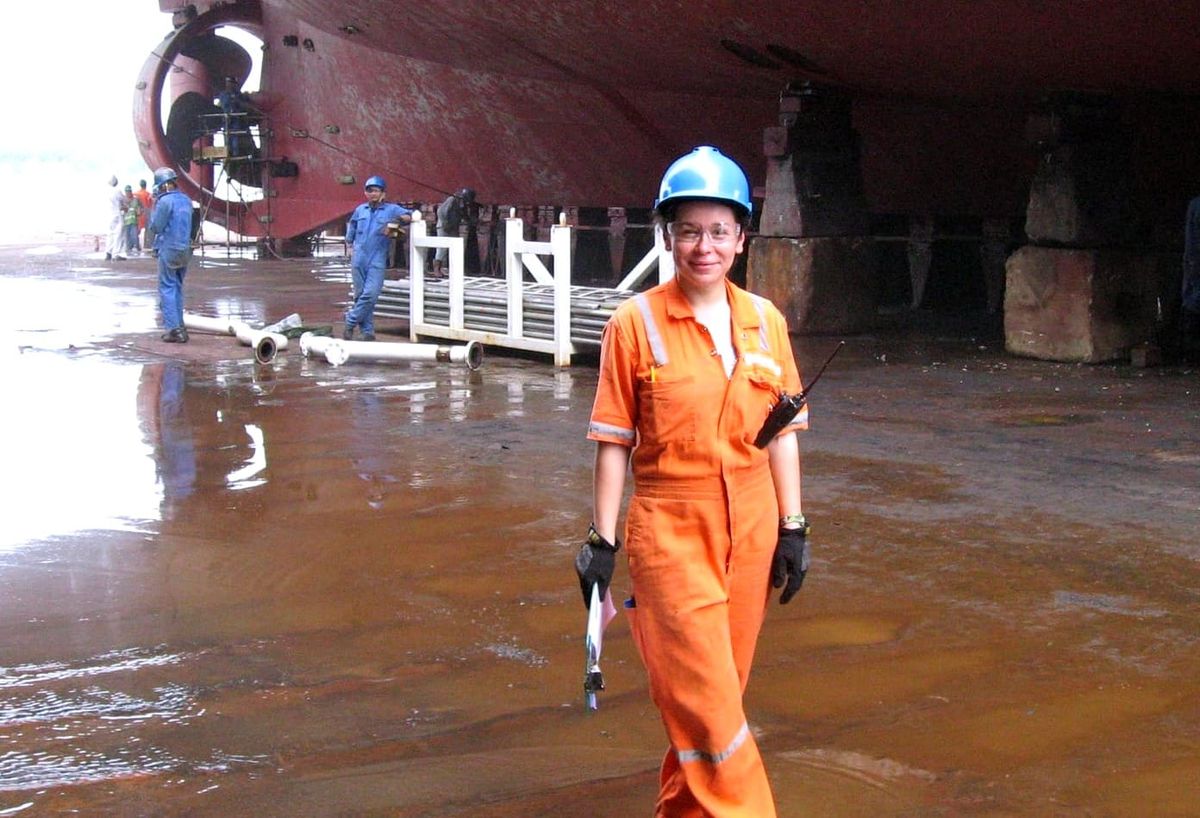
Some people spend their childhood dreaming of the sea. Aurelia Paraschiv, who grew up in a village in communist Romania, was not one of them.
"I didn't grow up next to the ocean," she says. "It was very far away. I was always fascinated by nature, but I didn't really think about the ocean. It was beautiful, but also very mysterious, because you don't know much about it. It wasn't even something we studied much at school."
Today she is the founder of SaveOCEAN, a technology company based in Norway, working to help people understand and protect the world's waters. Getting there meant years in some of the most male-dominated workplaces there are, offshore and in technology, and, later, accepting that she was the one who should lead.
From a landlocked village to the open sea
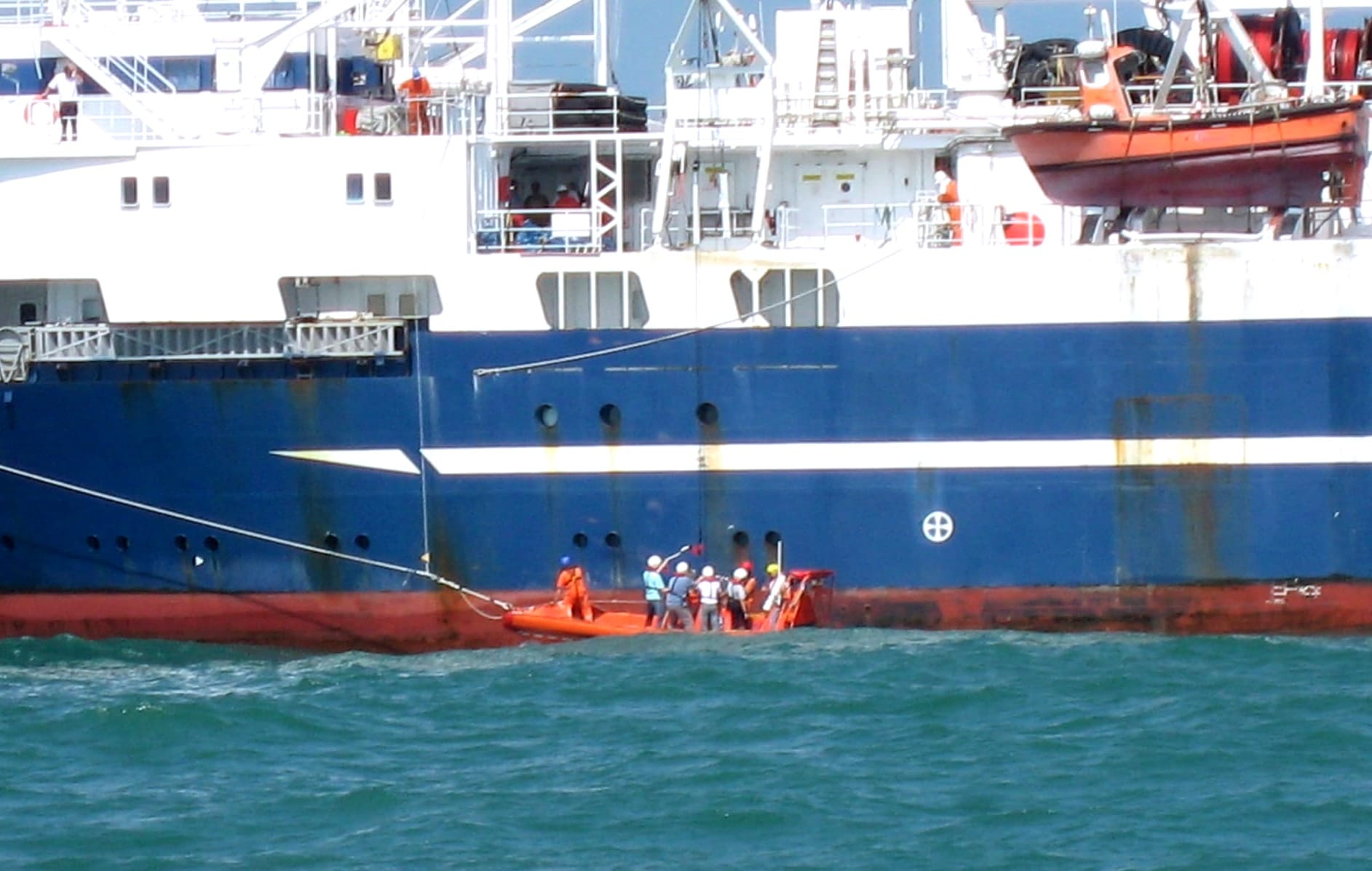
Her love of nature led her to study geology and geophysics in Romania. More than 20 years ago, she joined an international company and found herself at sea, carrying out seismic surveys.
It was out there that the ocean began to work on her. "I saw turtles and dolphins swimming," she recalls. "That was when I became curious."
She later worked with IoT radar instruments that measure waves and detect oil spills. Today she is a technology product leader working with sensors, satellite data and AI, and a Senior Fellow at the SDG Center, Geneva.
One of three women on board
Offshore work in those years was almost entirely a man's world. "If you were lucky, there were three women on board," Aurelia says. "You were surrounded by men."
As a newcomer, she soon sensed that not everyone believed she belonged there. "Some of the more experienced colleagues would make you feel inadequate, even stupid. Some would not speak to you at all, simply because you were new and inexperienced, and assumed to know nothing." Later, as she moved into more senior roles, she faced a different challenge. Different cultural backgrounds, communication styles and, potentially, the gender difference could create gaps in understanding that easily led to misunderstandings.
She never met hostility with hostility. "I never raised my voice," she says. "I always tried to stay positive, and to approach things with a smile, or with a gentle 'How can we work this out together?'" When tempers flared between the men, her calm often helped cool things down. "Perhaps having a woman on board made them feel they should be a little more polite."
"If you were lucky, there were three women on board."
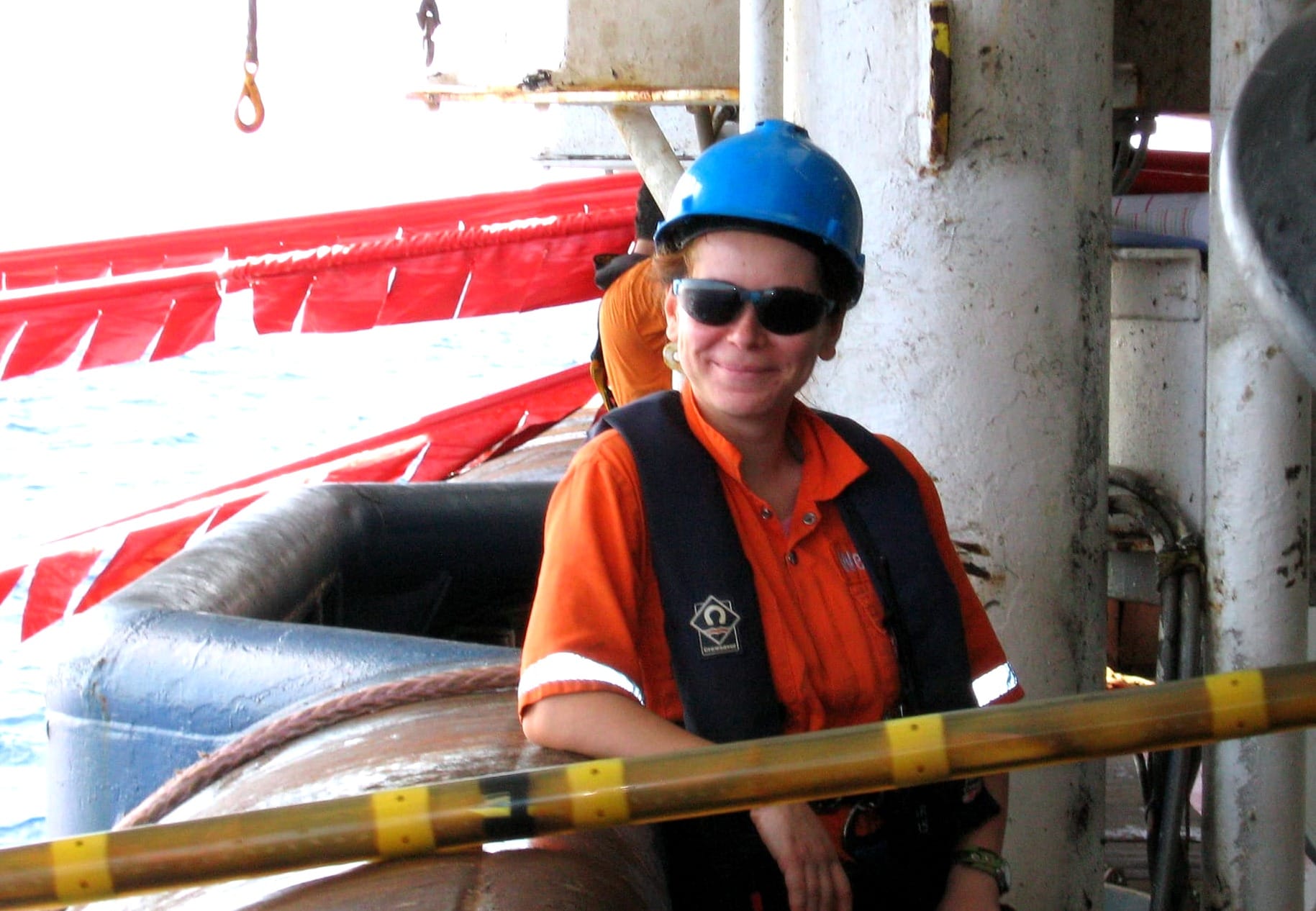
One photograph from those years sums it up for her: Aurelia running an operation, with a row of men standing behind her, watching. "Everybody was waiting and I was the only one actually doing something," she laughs. "It shows the reality of being the only woman there."
She never had a serious conflict, but she does not pretend it was easy. "It was the toughest time, I would say, being a woman in an offshore environment."
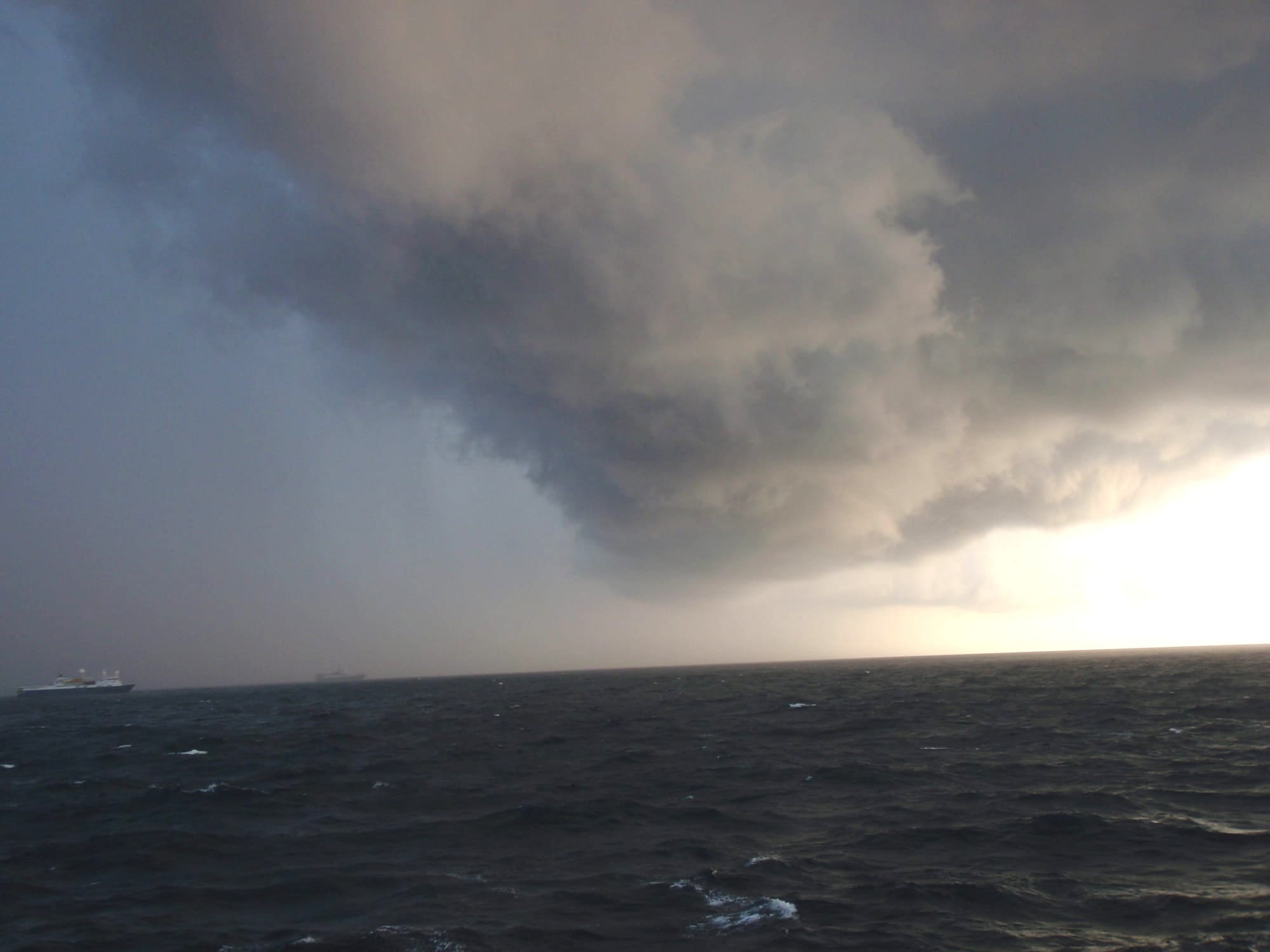
Then there were the storms. "It was scary," she admits. "During the storms, we always wondered: are we going to survive this?" She has a photograph of a storm rolling in, but none from inside one.
Between two worlds
Aurelia came to Norway for a job, expecting to return to Romania one day. She stayed for the nature, the calm and her children, who prefer Norwegian. She is frank that not becoming fluent in the language has made integration harder. "That is my own responsibility. Everyone who moves to another country should adapt." Yet part of her remains elsewhere. "Half of my soul will always be in Romania, with my friends and especially my family."
She did not plan to lead
The idea for SaveOCEAN grew out of frustration. Working with oil spill detection systems, Aurelia kept asking why, with so much technology and data available, spills were still not spotted in time or cleaned up faster.
"That was the trigger," she says. "I asked myself how I could use my IT and practical experience to help protect the ocean."
Yet her first instinct was to hand the idea to someone else. At a conference she met a fellow sustainability leader who shared her vision, and she tried to persuade him to take it forward. Instead, he saw the potential in her and encouraged her to lead the effort herself. "He told me: you have a voice, you should do something about it."
It is a moment many women will recognise: having the knowledge, the passion and the vision, yet hesitating to step into the spotlight. Rather than taking the opportunity for himself, he challenged her to believe in her own ability to make a difference. He later became her co-founder and remains a trusted mentor today.
SaveOCEAN was founded in November 2025 and is based in Asker, just outside Oslo.
From one observation to a pattern
Most of us have stood beside water and sensed that something was wrong: plastic along the tideline, a strange film on the surface, an animal in trouble. Aurelia believes these moments matter, because the ocean is far too big to be watched by scientists alone.
When one person notices plastic gathering on a stretch of coast, it is an observation. When others notice the same spot week after week, it becomes a pattern, and patterns can be traced back to their source. "Somebody reports it, somebody else reports it, and it becomes clear: this is a real threat," she explains.
The same goes for pollution, animals in distress, invasive species, seagrass and water quality. Observations from ordinary people, noted with a time and a place, are a form of citizen science that can sit alongside scientific data.
And when no one takes responsibility for a polluted shore, people can act themselves. "Coasts are protected on paper, but in reality there is little protection," she says. "If you clean up with ten friends, you inspire another ten friends on another coast to do the same."
For Aurelia, everything begins with understanding. "If you don't learn about it, you won't care about it." That simple idea has become a guiding principle for SaveOCEAN, which is building partnerships that connect education with real-world impact. One such collaboration is with a conservation organisation in Cameroon working to protect vulnerable turtle nesting areas.
The work depends on volunteers, students and limited funding, and Aurelia does it unpaid, alongside a full-time job. "I don't find it a burden," she says. "If you are passionate, you do it because you believe in it."
"If you don't learn about it, you won't care about it."
What you can do
Look closely. Next time you are by a coast, lake or river, notice what is there and what should not be. Pick up what you can, or organise a clean-up with friends.
Think about your laundry. Washing synthetic clothing, particularly fast fashion, releases microplastics that travel through waterways to the sea. As Aurelia puts it: what goes into the ocean comes back to us.
Don't wait for the dream
Growing up under communism, Aurelia saw little of the world beyond her village. She had no idea she would be good at technology, and she did not dream of the sea. She simply kept saying yes.
"If I had thought 'this is not for me,' I would never have gone offshore, and I wouldn't be here today," she says. "If you feel in your stomach that you should try, just go for it."
"I strongly believe that we women are remarkable," she adds. "By sharing our experiences, we can encourage others to believe in themselves and not fear failure."
And if your childhood dream never arrived? "Don't be disappointed that you haven't found your dream. Maybe it will find you. Like the ocean found me."
SaveOCEAN's free app, OceanQuest, is available at saveocean.net.