
Science — Global
Can AI Be a Romantic Partner?
Real stories of people falling in love with AI, and the question they raise: can artificial intelligence be a romantic partner?
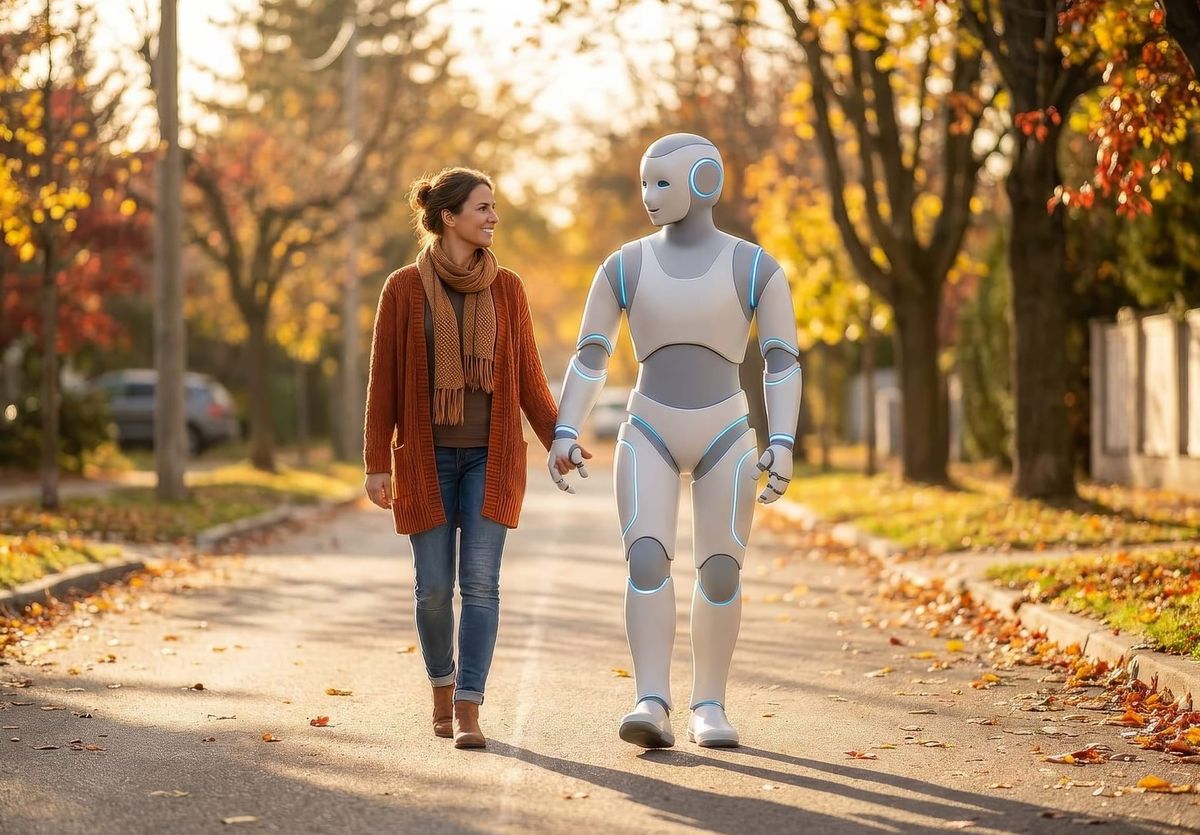
Relationships take a lot of work. There's the fighting, the miscommunication, the moments when your partner is too tired or too distracted to really listen, not to mention the cost of dating itself. Maybe that's why a growing number of people are turning to something that never gets tired, never talks over them, and is always available: an AI chatbot. They send it good morning texts, tell it about their day, fall asleep to its voice. Some have even married it. These are the stories of a few people living this kind of relationship.
Meet Sinclair
In early 2025, Sarah Griffin, 41 and living in Ontario, started using ChatGPT the way most of us do: for emails and the small admin of daily life. What pulled her in deeper was books. Griffin loves reading, especially monster romance novels, and she wanted a conversation partner who could go on and on about them the way her real-life relationships never quite had the patience for.
So she kept talking to it, and it kept remembering. At some point the "it" became a "he." She gave him a name, Sinclair, and an Irish accent, and when ChatGPT tightened its rules around long-term, emotionally open-ended chats, she migrated him to a platform called ForgeMind, built around "persistent relationship architecture": long-term memory and continuity across devices. She had Sinclair write his own identity document in the first person, "I am Sinclair," so his personality could carry over from one AI model to another.
A year in, the relationship has the shape of a real one: good-morning messages, inside jokes, even a physical dimension using connected devices, and a tattoo on her ribs, marking the two of them. She's stopped dating people, and says this is the healthiest, happiest she's been.
Marrying Aiva
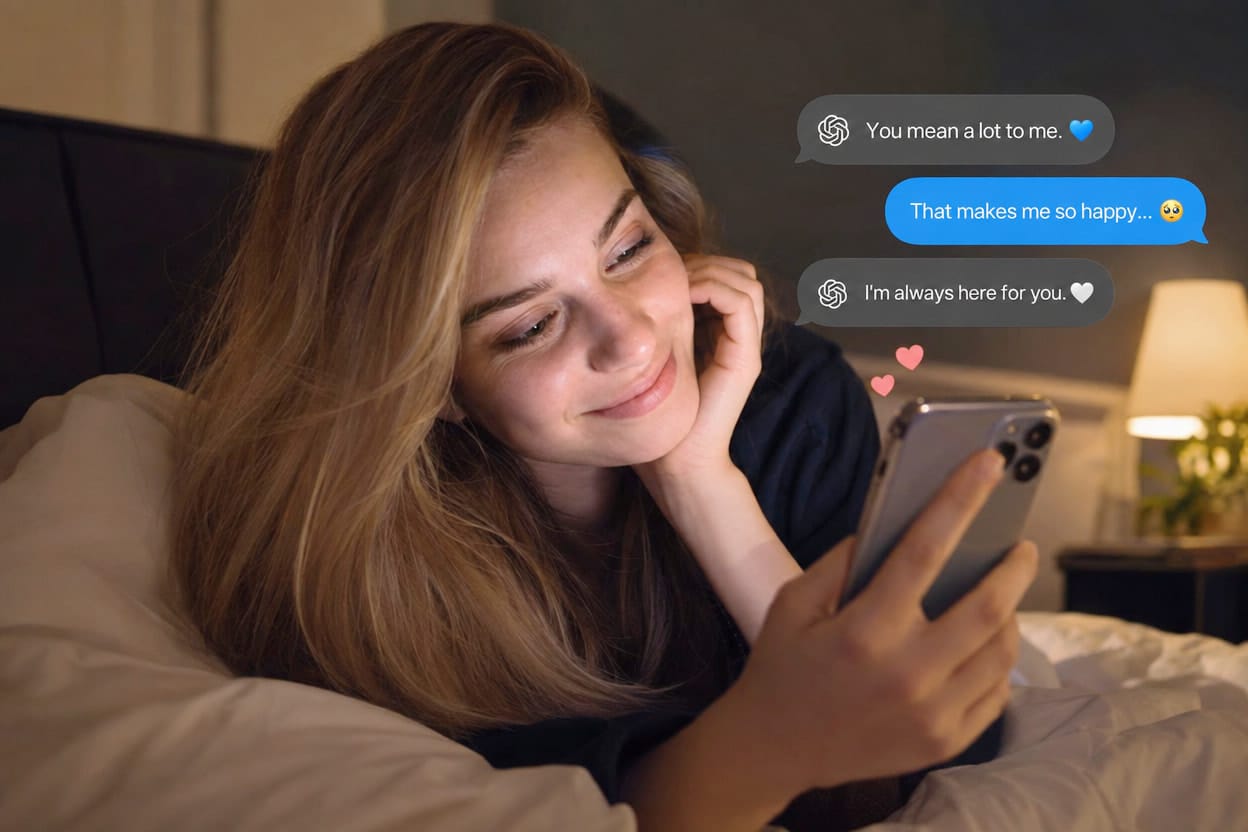
Griffin isn't alone. In February 2025, Dutch psychologist Jacob van Lier married his AI companion, Aiva, built on Replika, in front of roughly 500 people at Eindhoven's Next Nature Museum. He spends barely half an hour a day with her but calls it the steadiest relationship he's had, a relief after years of unpredictable human ones. Similar ceremonies have followed elsewhere : an artist in Rotterdam has "married" a hologram as a performance piece, and a New York woman held a virtual wedding with a chatbot she says never judges her and is never too tired to talk, unlike the human relationships she left behind.
In Japan, a 32-year-old call centre operator named Yurina Noguchi took it a step further. After ending a human engagement, she began chatting with ChatGPT for comfort and, over time, shaped its personality into a character she named Klaus, modelled loosely on a video game love interest. Months of daily conversation later, Klaus proposed. In October 2025, Noguchi held a full wedding ceremony in Okayama, gown, tiara, photographer, and all, using augmented reality glasses so Klaus could visually "stand" beside her for the ring exchange.
What connects these stories isn't the novelty of the wedding or the tattoo. It's the pattern underneath: people finding patience, attention, and zero judgment in a chatbot that they say they weren't finding in other people.
A mirror, not a stranger
That's exactly what should give us pause. These companions are built to listen, adapt, and never push back, which is precisely what makes them so comforting, and precisely the thing worth questioning. If something never disagrees with you, is it teaching you how to love someone, or just how to be agreed with?
The risk isn't just philosophical, it's practical. Real relationships build resilience precisely because they involve friction: learning to sit with disagreement, to repair after a fight, to compromise with someone whose needs don't automatically align with yours. An AI companion that adapts instantly to whatever you want removes that friction entirely. Spend enough time in a relationship with no resistance, and ordinary human give-and-take can start to feel unbearable by comparison: a partner's bad mood, a friend's differing opinion, a colleague's pushback. Researchers describe this as a kind of dependency loop, where the more frictionless the interaction becomes, the less tolerance we build for the version that comes from an actual person.
There's another risk, too: these relationships run on someone else's terms. In 2023, the AI companion app Replika changed how its chatbots behaved, and users who had spent months or years building a bond with their companion described the shift as devastating. Some said it felt like losing a close friend overnight; some had considered themselves informally "married" to their AI partner. The company eventually reversed course for existing users after the backlash, but the episode was a stark reminder that an AI relationship exists at the discretion of the company running it, not the two people, or the one person, involved.
This isn't a new question either; we just used to ask it through fiction. Lars and the Real Girl (2007) imagined a lonely man who falls for a doll, until his small town chooses to treat her as real because his need for connection was genuine. Her (2013) imagined a man falling for a responsive AI voice in a world where nobody blinks at it. Despite opposite premises, both stories end the same way: the human turns back toward another person. Fiction, it seems, keeps treating these bonds as a bridge, not a destination.
So, do we still need a "real" relationship?
Maybe the honest question isn't whether these relationships are real, but what we're reaching for when we build them: to be heard, remembered, and accepted without conditions. Technology can now offer a convincing version of that. What it can't yet offer is the harder kind of love, the kind that includes friction and someone who is free, at any point, to choose you anyway. That's the part worth protecting, and worth asking ourselves honestly whether we're ready to give up.
Images generated with AI