
Identity-Nordic
How Cold Water Brought Author Laura Hall Back to Herself
Travel writer Laura Hall on burnout, belonging and her memoir about a year of cold-water swimming across Scandinavia.
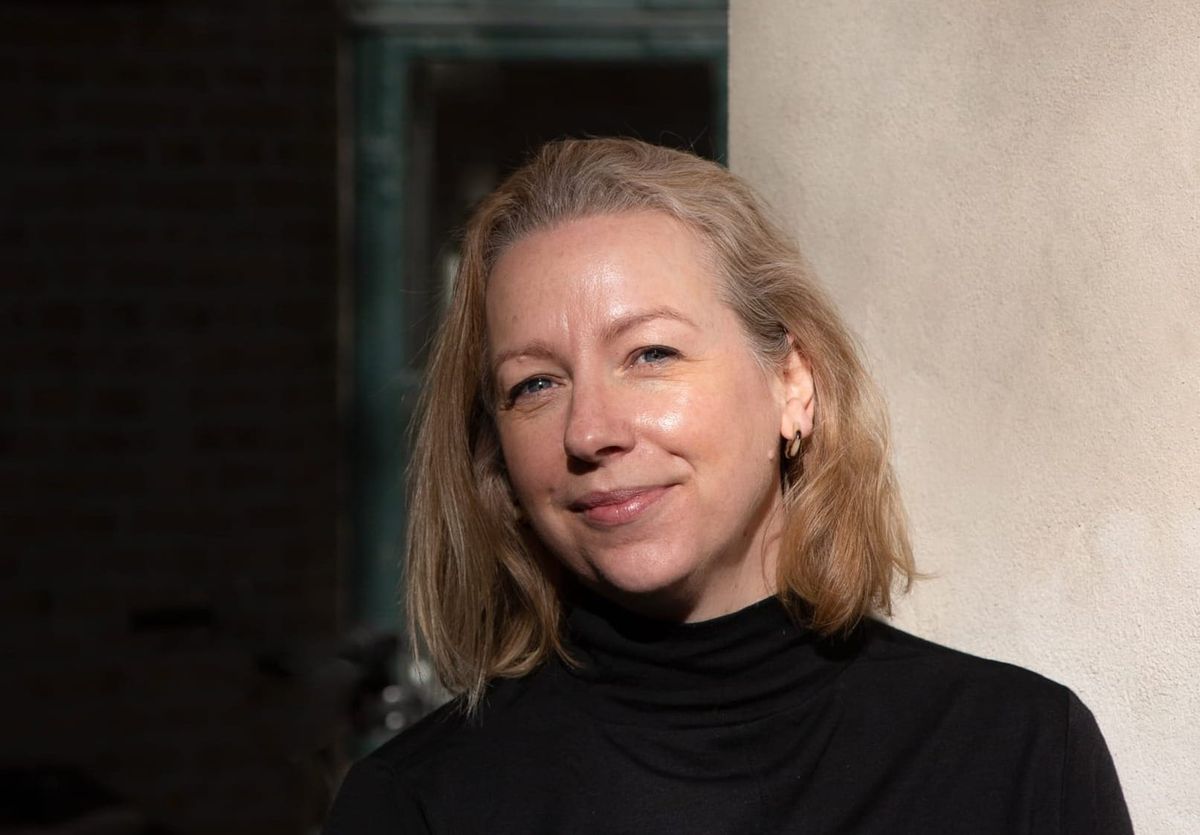
Laura Hall is an award-winning author, travel writer and journalist based in Copenhagen. Her work appears in Kinfolk, Condé Nast Traveller, The Sunday Times, BBC Travel, The Guardian and Vogue Scandinavia, among others. She won the Cheshire Prize for Literature in 2022, and in 2025 she was shortlisted for AITO Travel Writer of the Year and named runner-up for the Tom Grass Spirit of Adventure Literary Prize.
Raised in England and long drawn to the north, Laura moved to Copenhagen with her family in 2017, expecting to stay two years. They stayed. But the life that seemed to be working began to unravel, and when burnout set in, she went back to basics and asked herself what a good life is actually built from. Her answer took her into cold water across Scandinavia, and into her memoir, The Year I Lay My Head in Water: Swimming Scandinavia in Search of a Better Life.
We spoke to Laura about burnout, bravery, and what happens when cold water dissolves the distance between strangers.
Tell us a little about yourself: who you are, what led you to Copenhagen, and what your life looked like before this book began.
I’ve spent much of my life working as a travel journalist and I’ve always been a little bit obsessed with Scandinavia. When I was in my twenties, I persuaded a travel publisher to let me go to Reykjavik to write a book! So I was always looking to the north. I moved to Copenhagen in 2017 for fun with my family and we realised pretty quickly that it was not going to be a two-year thing. We really vibed with the city.
I found my feet culturally pretty quickly, but it was a harder slog with work. I came into Copenhagen initially as the communications director of a travel company, working remotely, but I soon found that running a marketing team based in Los Angeles from Copenhagen was impossible. I worked as a copywriter for a bit and then I found a job in a travel firm that suited me perfectly. I was writing about how great it was to be in Denmark, which was exactly how I felt.
You’ve described Copenhagen as a dream that was working, until it wasn’t. Could you take us back to the moment you realised the burnout wasn’t going to resolve itself, and that something had to change?
Tiny things can build up, can’t they, until when you take them together they feel insurmountable. It was not just one thing, but it began at work. I started to fall out of love with my job, after I had three bosses in two years quit, and I just wasn’t happy. I wasn’t sleeping, I wasn’t being a great mum, I felt annoyed and snappy all the time and I couldn’t figure out what to do. I just knew that things weren’t working, and I felt like nobody was going to come in on a white horse and save me. I felt like I had no choice really but to leave my job and find a way to build a better life for myself.
Start with the things that make you happy.
Why swimming, specifically? Of all the ways one might respond to unravelling, what made cold water feel like the right place to look for answers?
It’s partly because I lived on the water in Copenhagen in a flat where you could see the sea from just about every room. It was a small harbourside flat but that sight and sound every day, all day long, was hypnotic. I have always loved to swim, and as a family, growing up in England, we had always swum at any time of year. If we were beside the sea, we were in our swimming costumes, basically! I swam a lot as a student to relieve stress during exam times, and I just always loved it.
One of the things I did after I left my job and started thinking about what to do next was to start the thought process of what a good life looks like. I thought that since I’d drawn a blank at work, and I couldn’t really see a way forward, I should start with basic building blocks of what I really love doing. I narrowed it down to three things: swimming, meeting new people, and being creative. It’s a blueprint for me in terms of how to build a good life: start with the things that make you happy.
You swam everywhere from Greenland’s icebergs to Iceland’s Viking-era spas. Was there one swim, one particular body of water, that marked a real turning point in how you saw your situation?
I went swimming in Bergen harbour one winter’s afternoon and it was the kick-off for all of it, actually. I would have just been someone who went swimming occasionally in cold water if it had not been for that. It was a freezing cold Sunday afternoon and all the Christmas lights were showing up the hillsides and the stars were coming out. I only went in the water for a few seconds and then came out again, shivering and pink all over. I warmed up in a cafe with some friends and all of a sudden, the cafe started filling up with other women doing the same thing, and we started talking to each other, swapping stories.
In an instant, I went from being a slightly lost English person in Scandinavia to being part of a tribe. I said to my friend: I’m going to write a book about this, about the mermaids and the swimming cultures of Scandinavia. It’s so weird that I was so sure, but I knew it was something special in that moment.
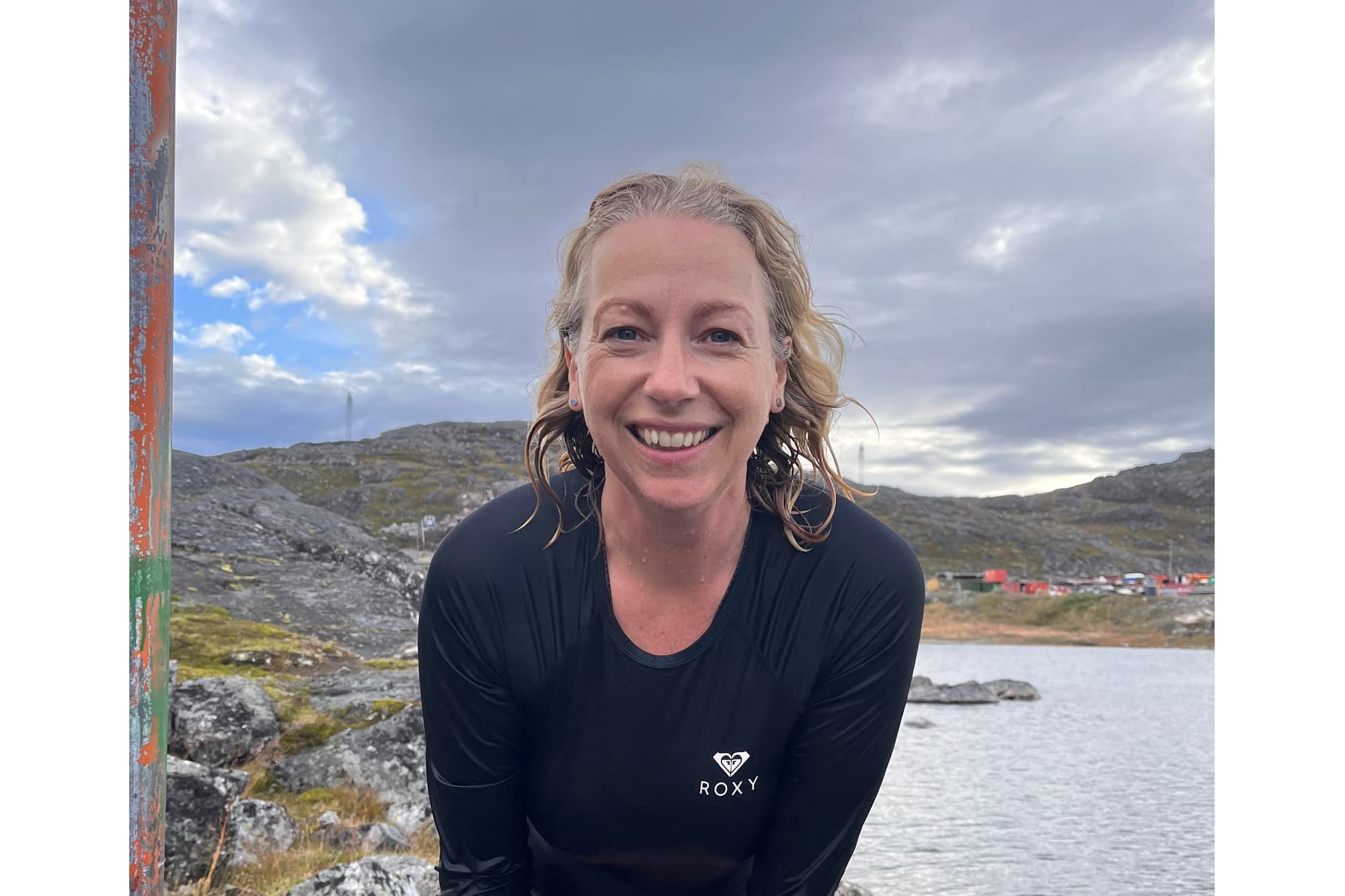
You write about meeting others doing the same thing, people using the water to reconnect with something they’d lost. What did those encounters teach you that swimming alone couldn’t?
I actually love swimming alone too, but there’s something special about exploring nature with a friend. I love the way we can egg each other on to keep going when it’s cold and we’re not feeling brave, and how we can sit and chat afterwards. It’s like the cold water dissolves a boundary that’s between you when you’re on land. Scandinavians can be very good at giving each other privacy and space, but sometimes it’s nice to break that down and find something a little closer. I think a lot of people feel exceptionally close to their swimming companions because of this.
As a travel writer, you’ve spent your career observing places and other people’s stories from the outside. What did it demand of you to turn that same attention inward, and write yourself as the subject?
That’s a really interesting question, because I still feel a bit uncomfortable about writing about myself. As a journalist, you’re never the story. Even when you write in first person, as I often do, the star of the story is the place I’m visiting and the people who live there, not me. I’m just a proxy for the reader.
In the book, I started out just writing to see if it would help me make sense of what I was going through. At the start, when I was going through the burnout, I couldn’t really make sense of how I was feeling. The writing helped put that overwhelm and exhaustion into words, and that helped me deal with it a bit. Then I started to feel that maybe just as it was helping me, it might help someone else to read it. I really hope it does. Self-examination is hard and you have to put your ego to one side and be truthful for a memoir like this to connect.
It’s like the cold water dissolves a boundary that’s between you when you’re on land.
A year is long enough for change to happen quietly, without you noticing until you look back. What shifted in you that you didn’t recognise until it was already over?
Isn’t it fantastic how time works like that? I thought exactly that when I conceived it as a book that takes me through a year. At the start, I thought: when I look back in a year’s time, I’m not going to feel like this any more. It was like a promise to myself that things would get better. It was a thought that got me through the harder days, that idea that things always change over a time period like a year. You can look back and the past seems unrecognisable.
At the end of the year, I was unrecognisable, really. I was so much braver. I think that is the biggest change overall: my confidence and my bravery had increased so much. And when you’re brave and confident, you can do anything.
Laura’s year in the water did not hand her a new job or a neat answer. What it gave her was harder to measure and, as she tells it, more lasting: courage. Her blueprint is worth borrowing, wherever in the world you happen to be starting over. Begin with what you love, find the people who share it, and give it time.

The Year I Lay My Head in Water (Icon Books) is out now, with the paperback following on 28 January 2027.
More of Laura's writing at hellolaurahall.com