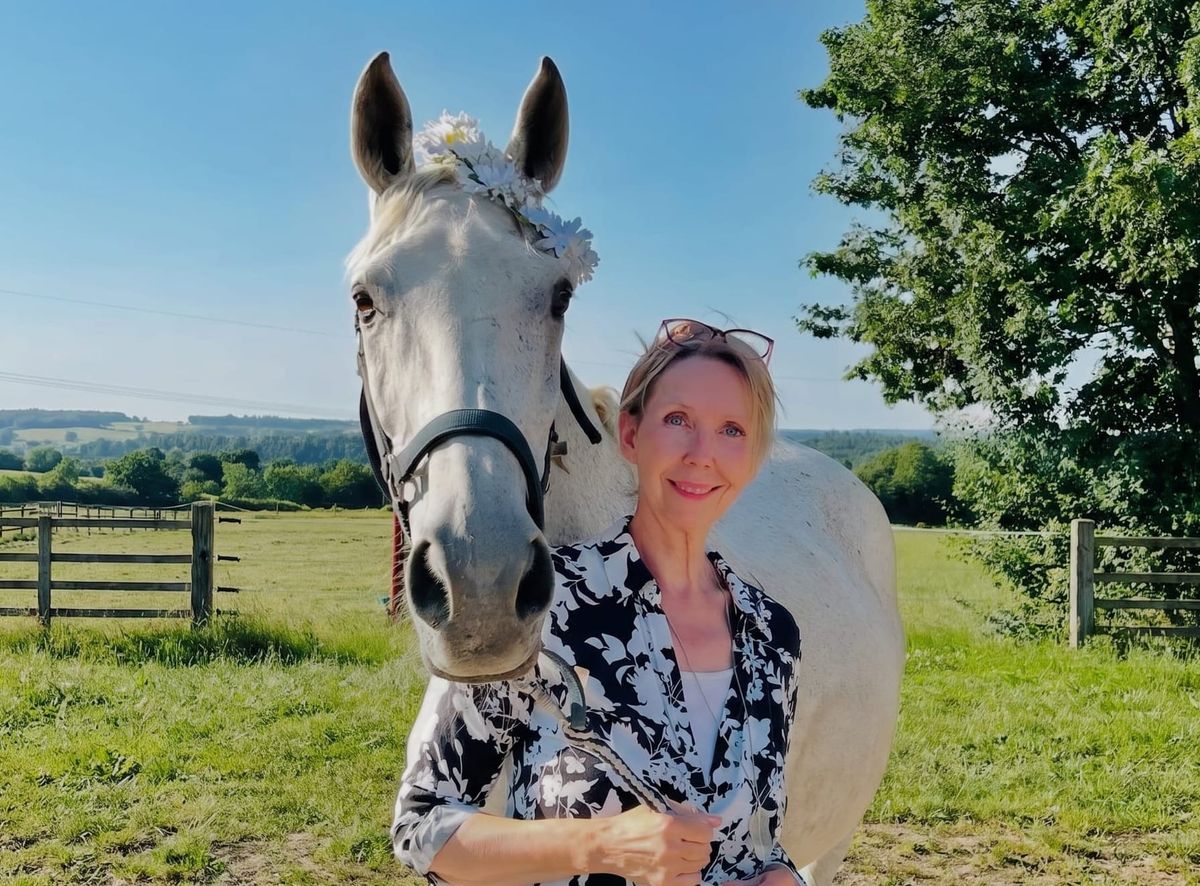
Most people who work with horses learn to read them over the years. Mia Mattsson learned as a child, and for reasons she would not wish on anyone.
Born in Sweden, Mia is an author, lecturer and animal communicator. Since 1997 she has worked with horses belonging to royal families and Olympic riders, given talks from Stockholm to Bahrain, and written three books in Swedish. Between them, they cover how she communicates with animals, her rescue work in war zones, and the organised crime that animals get caught up in.
In 1999, after a conference on stray animals in Sofia, she founded Animals Without Limits, an international non-profit for animals in crisis. It is run entirely by volunteers, registered in the United States, and has offices in Stockholm and Stuttgart. The work has taken her through the Balkans, the Middle East and the US, and from 2010 to 2014 it ran a hospice in Naples for strays and old shelter dogs. In Naples it still pays for spaying, neutering and vaccinations, rescues sick strays and sends food to a local shelter. Mia now lives south of Stuttgart with her horses and is preparing to launch her podcast, Beyond Words.
We spoke to her about how she works, where the ability comes from, and why, at 62, she has started writing her own story. What follows is her own account of how she works.
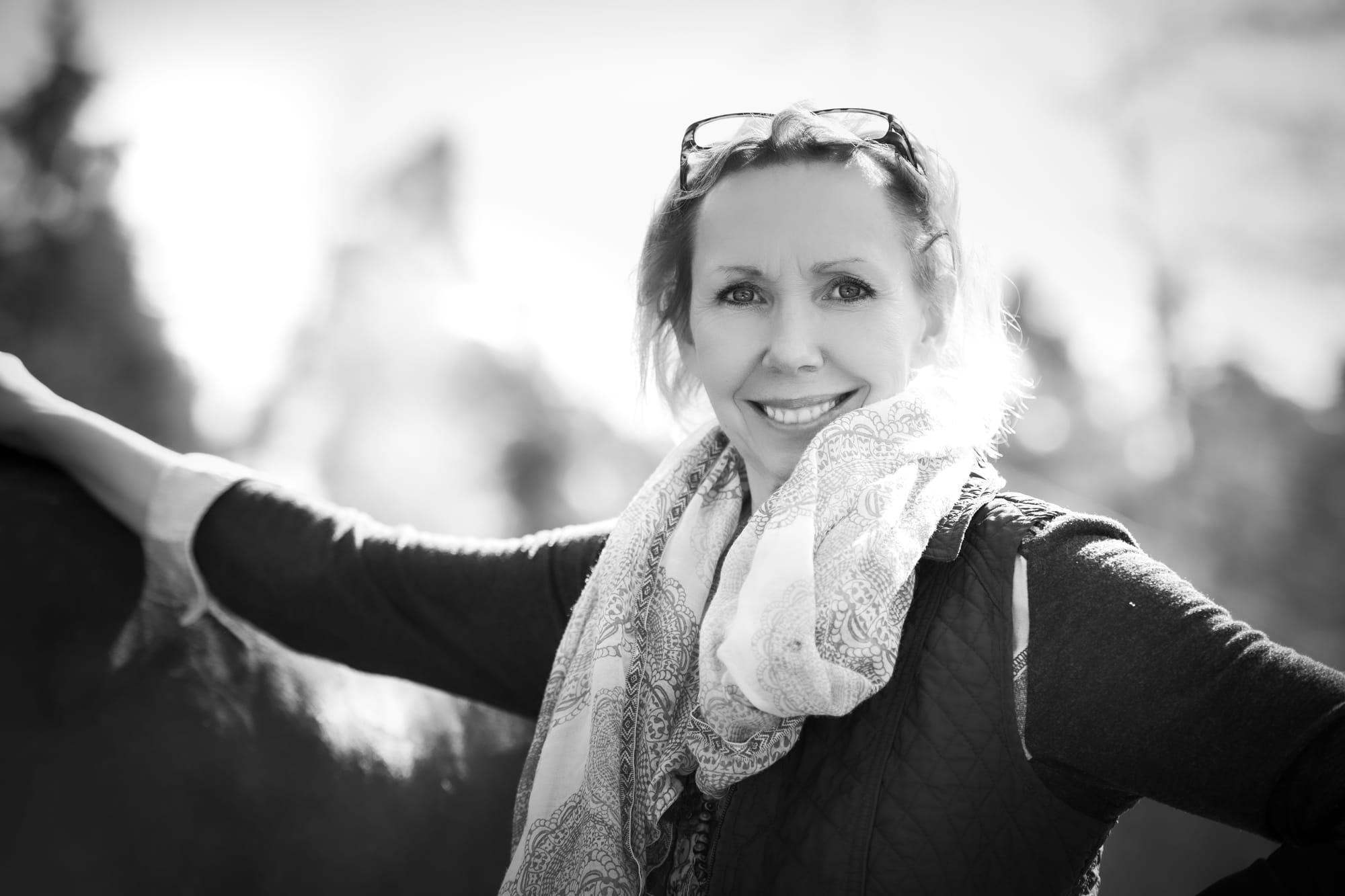
You don't like being called an animal communicator. So what would you call it?
People call me an animal communicator. I have never been comfortable with that label, but I understand why it is used. What I actually do is read an animal’s energy. When I meet an animal, I sense directly what the problem is, and from there we can work out how to move forward.
I have done this full-time since 1997. Today I am fully booked, so the clients who come to me usually come because something is genuinely wrong with their animal. That is also why I value the rescue work so much. There, the vets and I work side by side.
What actually happens when you sit down with an animal?
Animals don't speak, so I have to borrow human words for what I get. Animals see in pictures and they send energies. Before I start, I bring my own energy down until I'm neutral, like the zebras and the lions that can drink next to each other at the waterhole.
Then everybody has to be quiet, the owner too. I use paper and pen and I have to sit quietly with the animal. I write what I get, the feelings, the pictures. So it's my words on their feelings.
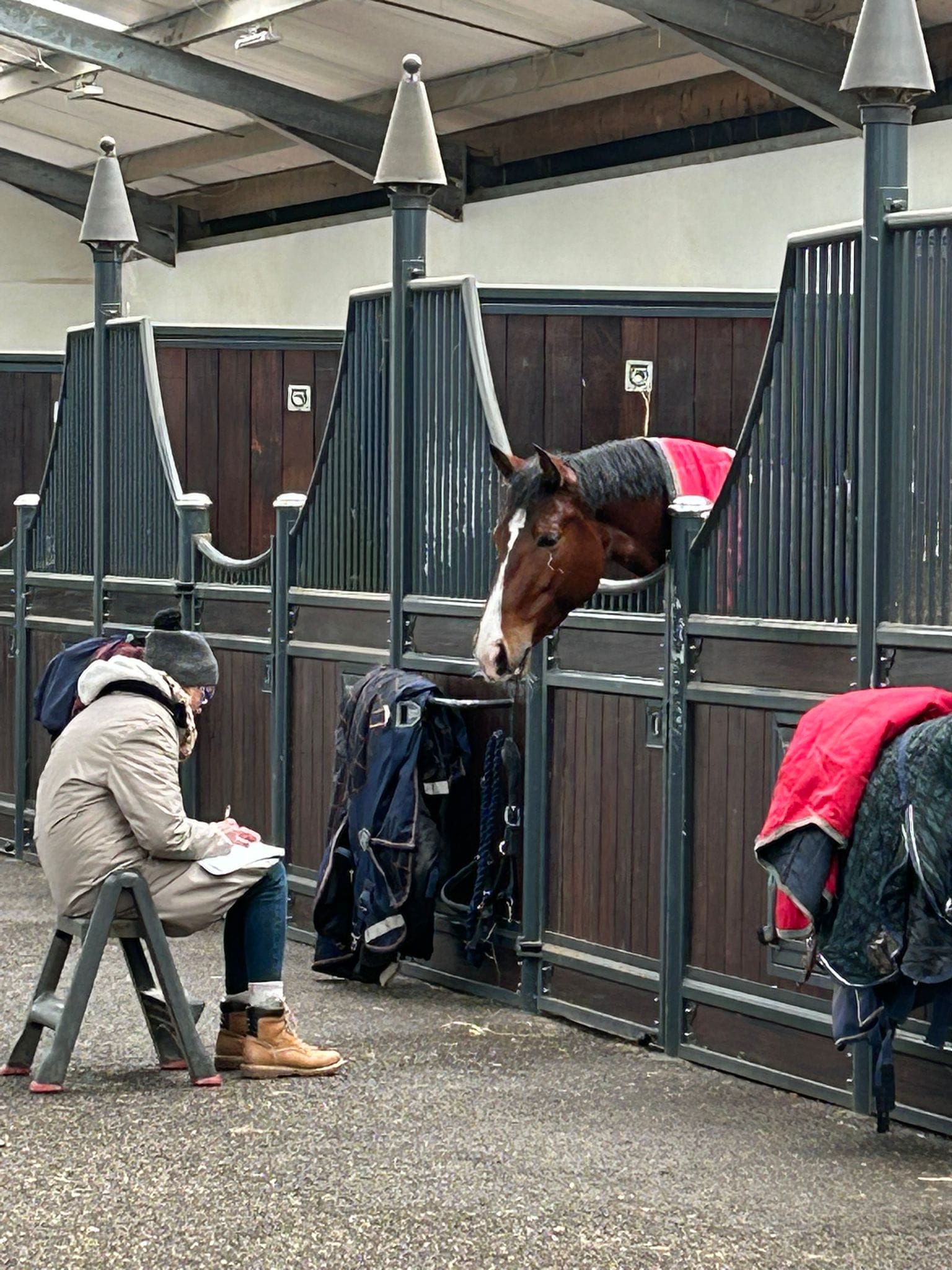
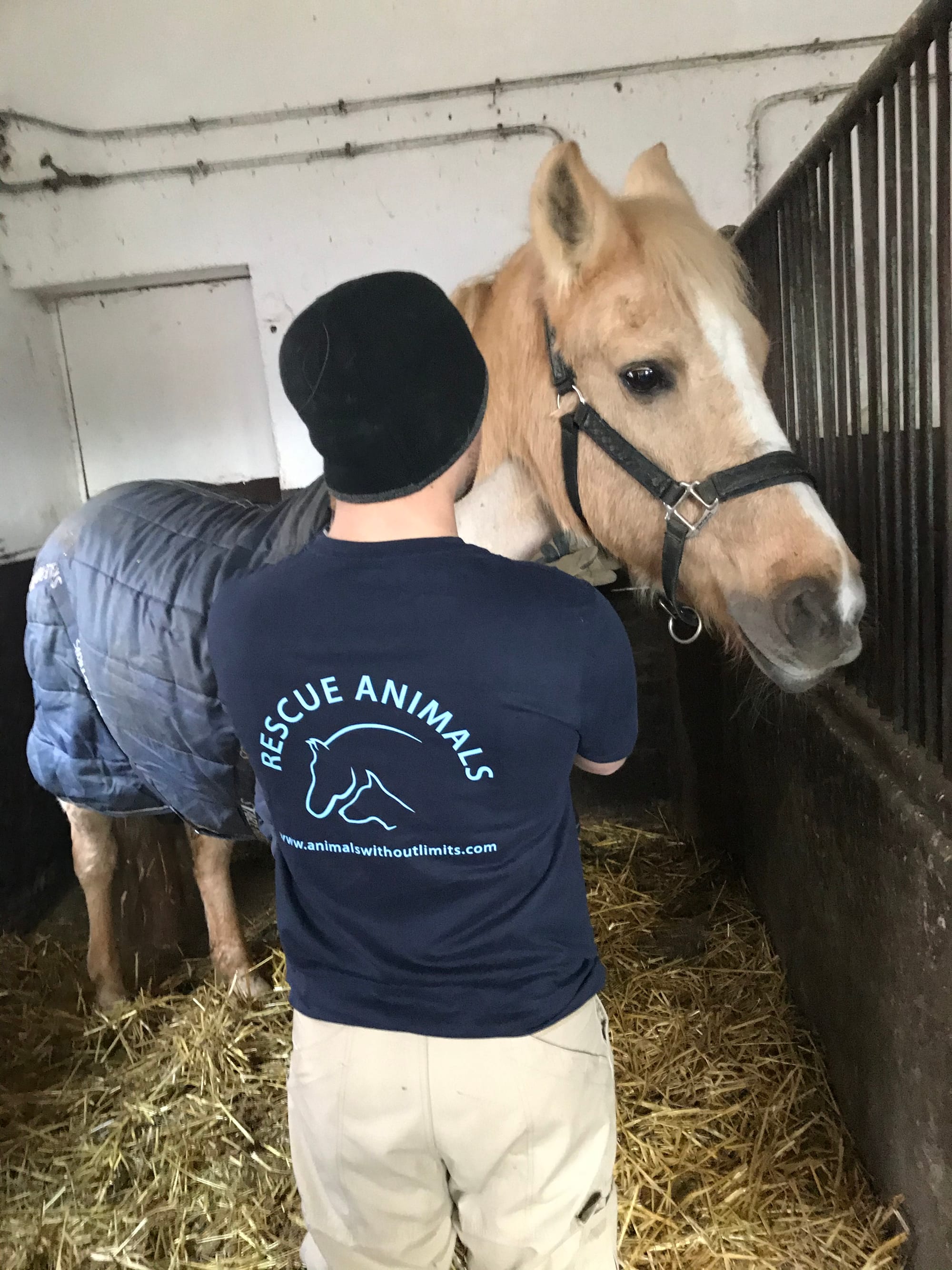
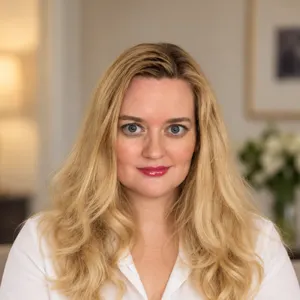
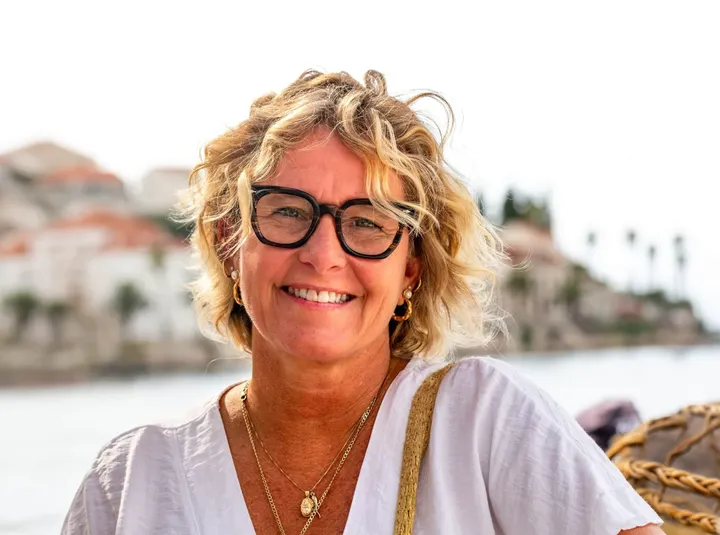
Left: Mia communicating with a client in the Cotswolds, UK. Right: a client with Sunshine, one of Mia’s horses, who helps visitors feel at ease.
Is there one case that has stayed with you?
There was a stray dog in Naples, found at a petrol station. The vets examined him properly and all they found was an old gap where a tooth was missing. Later I sat with him, and I kept sneezing and rubbing my own nose. I said to the vet, I think it’s something in the nose. The vets looked again and found it. The missing canine tooth was up in his nasal passage.
And when people don't believe you?
I don't argue. Once a client was driving me from Hamburg airport and she asked how she could know I wasn't a charlatan. I said, well, you never know. You will see. Everything I have, I have from word of mouth.
When did you first know you could do this?
It didn't come overnight. I started with horse massage, feeling where a horse was hurting, and I went full-time in 1997. As a child I was always told I was so sensitive.
Where do you think it comes from?
The roots are painful. I grew up with abuse in my family, and I have written about that openly. When you live like that, you learn to read a room before anything happens. I could feel him coming home before we heard his car. That's what dogs know. You try to be zero energy, like an invisible fly. Don't see me. Don't touch me. That's when you learn how to read energies to survive.
I left home at 16. I believe we are all born with this intuition, and we lose it at school, when we let others think and feel for us so we fit in.
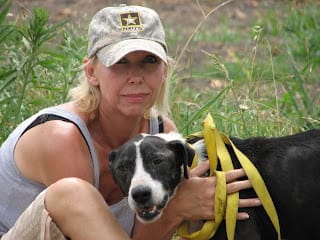
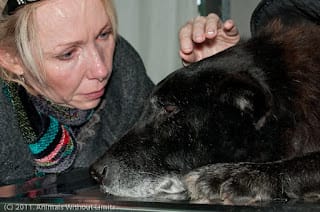
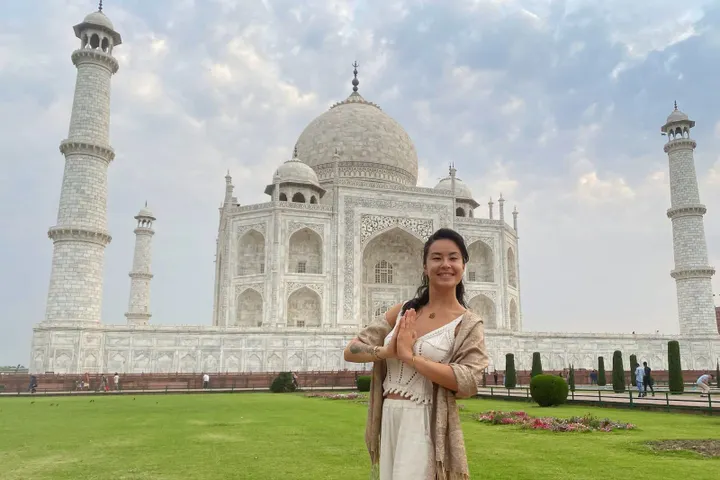
Mia’s rescue work with Animals Without Limits. Photos: Animals Without Limits.
You’re Swedish, you speak with a slight American accent, and you live in Germany. Can you walk us through how that came about?
I'm pure 100% Swedish! It started with a question. I was working in Stockholm with all kinds of clients, royals, Grand Prix riders, people with a little family dog. And I started to wonder about the animals in war zones. Not long after, a former client told me about a world conference for animal rescuers in Sofia, so I bought a ticket. I believe you have to be where the problems are. I flew down in 1999 with suitcases full of blankets and I stayed two years. That same year I started Animals Without Limits.
Then I had two years in Bosnia and Herzegovina, during the peacekeeping mission. That's where I met my husband, an American soldier. At first I thought he was some kind of peacekeeper, more Greenpeace than army. It took many dates before I found out more. After Bosnia came Naples, and the hospice for old street dogs and horses.
Now I live in Germany, and I don't speak German. My two children are 21 and almost 19, and they have Swedish and American passports. On holidays we always looked up the nearest shelter first and helped there for three days.
You've worked with royal and Olympic horses, written three books and lectured around the world. Does any of that feel like an achievement?
The animals and my kids, they keep me humble.
I'm writing a fourth book now, about what I call the other side for animals. I also do therapy sessions with psychologists, where children and adults brush and walk the horses. And Animals Without Limits is completely non-commercial. I have never been paid by AWL. My fees and the books pay for it.
Watch artist Gandee Vasan draw Mia and Julia for Casi Voice.
Tell us about Julia.
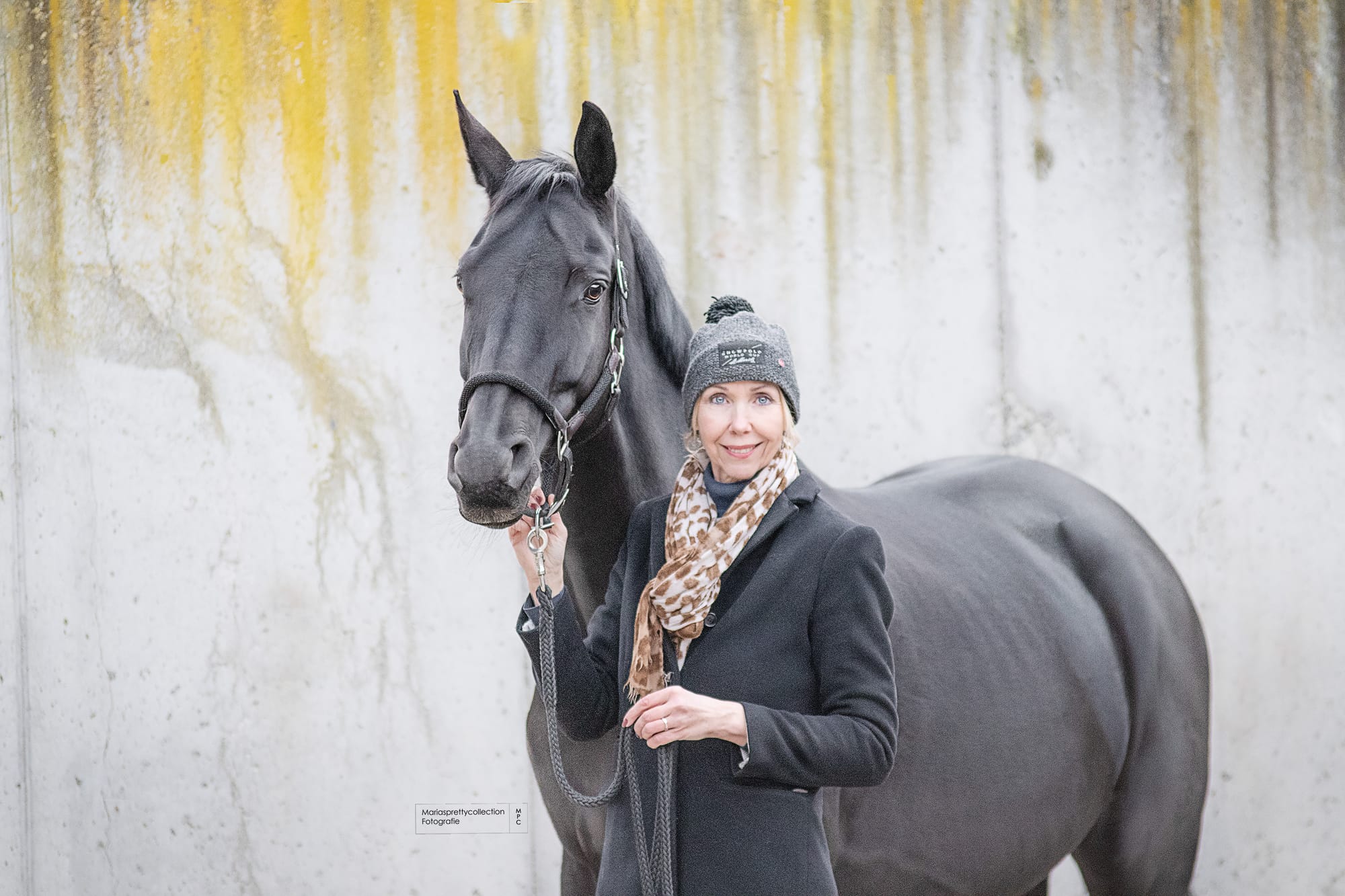
She was a polo horse. When I found her she had been beaten and starved. She was a skeleton. Now, after every two chapters of my book, I go up to the horses. I'm just breathing and I'm hanging on Julia.
Why write a memoir now, and why in English?
It's for my children first. I'm trying to end bad generations. I want to show my children that you can survive and you can do something very good with your life. Don't give up.
Now I'm looking for an English-speaking literary agent who really believes in it, because it is open, honest, brutally honest.
What got you through the hardest times?
When I was going through a difficult divorce, far from my family, I asked a vet clinic if I could clean out the animal pens. For six months I was shovelling at four in the morning, and it kept me steady. That was my way. I'm not saying it's the answer for everybody.
After 30 years, are you hopeful about how we treat animals?
Yes. I have seen it get better. But we have to keep speaking up. We can't silence our voice.
What would you say to a woman who wants to trust her intuition more?
Our own thoughts can get in the way of our intuition. Sometimes you have to stop and notice which voice you are listening to. Is it the kind, first inner voice and feeling, or is it the old, negative one?
Read more about Mia here: miamattssonmercer.com. Her books on animal communication are published in Swedish under the name Mia Mattsson-Mercer.
About the illustrator
Gandee Vasan is a London artist, born in Sri Lanka, who specialises in portraits of animals. He was 23 when the Royal Society of Portrait Painters gave him its award for the most outstanding work by a young artist, and his photographs are licensed around the world through Getty Images. He drew Mia from one of her own photos, as a gift to the story, and filmed it as he went. See more of his work at gandeevasan.com.
All photos courtesy of Mia Mattsson-Mercer. Drawing and video: © Gandee Vasan.