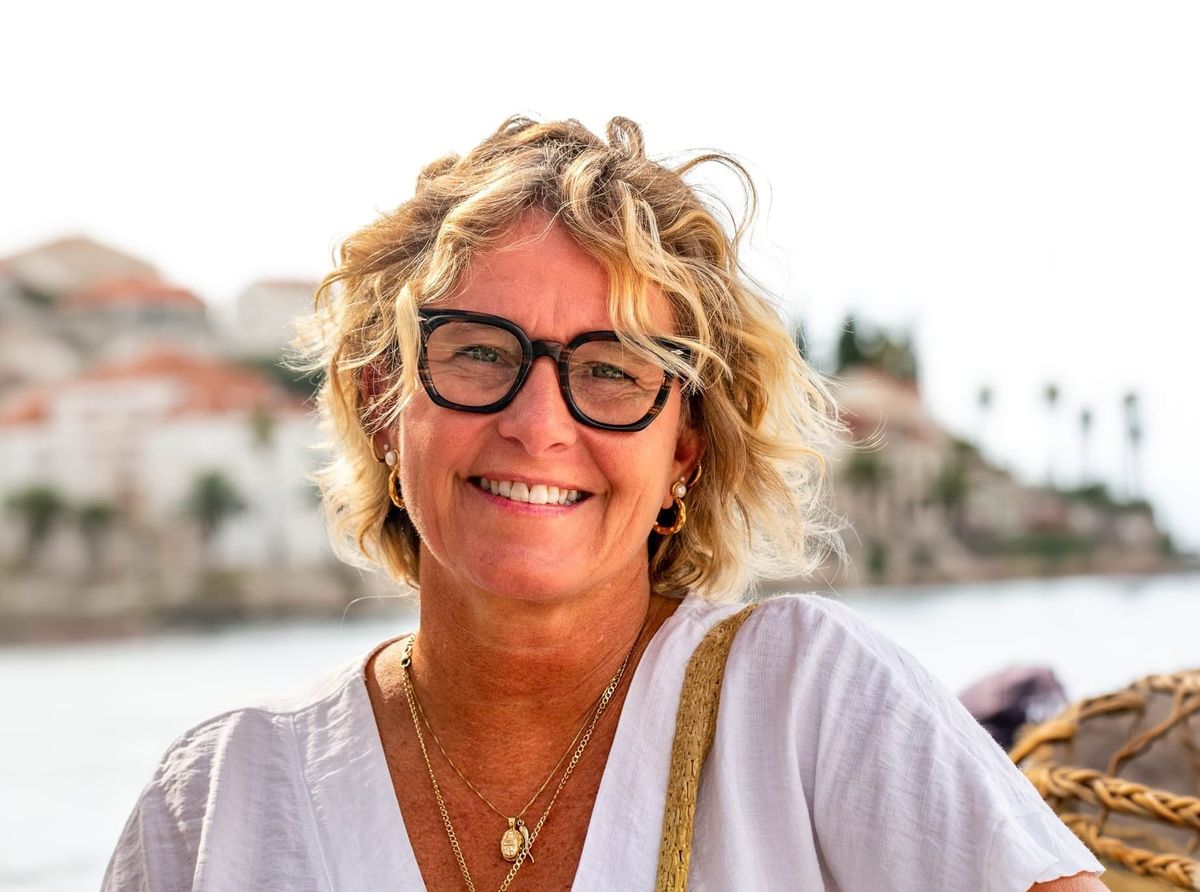
Ask author Sam Frearson-Tubito where she is from, and she will tell you it depends on how much time you have. She was born in the Caribbean, grew up across three continents, and is the third generation of her family to live this way. She has now lived in fifteen countries and twenty-one cities, and raised four children along the way with her Italian husband, Paolo.
After that many moves, you might think goodbyes would get easier. Sam says they haven’t, and that starting over still tires her. What she does have is a habit: in almost every new city, she starts a book club.
She first began writing her memoir, Beneath a Borrowed Sky: One Woman’s Search for the True Meaning of Home, for her children. Today she lives in Italy, runs Roaming Readers, the online international book club for Families in Global Transition, and hosts writing retreats in Puglia.
We asked her about the sadness that can come with an international life, what she hoped to spare her own children, and why being somewhere in person still matters.
You describe yourself as a third-generation global nomad. Could you tell us a little about where you were born and grew up, and which places have stayed with you the most?
I was born in Basseterre, St Kitts and Nevis, in the Caribbean, and grew up between France, Zambia, Zaire (now the Democratic Republic of the Congo), Côte d’Ivoire, Hong Kong, Egypt and England. Moving countries was part of our family life long before I arrived. My father grew up across countries too, so I inherited both the travelling and the complicated relationship with home that came with it.
Côte d’Ivoire holds a particularly special place in my heart. It was the last place I lived before going to boarding school in England, and perhaps that is why it feels so closely connected to my childhood.
Other places have stayed with me for different reasons: Italy, where my husband comes from and where we have repeatedly returned; Tokyo, where we raised our children for several years; and Portland, where I developed friendships that changed my understanding of what it means to feel supported. Each place holds a different part of me.
Many people who grow up between countries describe feeling rootless. Can you relate to that, and what do you answer when someone asks where you are from?
Very much so. I can feel comfortable in many places and still struggle to answer that apparently simple question: “Where are you from?” Being able to adapt doesn’t necessarily mean feeling rooted.
My answer depends on how much time someone has! Sometimes I say I was born in the Caribbean, grew up around the world and now live in Italy with my Italian husband. The longer answer involves several generations, fifteen countries and quite a few explanations.
For years, I felt I ought to have one clear answer. I’m learning to accept that my sense of home is spread across people, places, languages and memories. There is richness in that, but there is sadness too. I don’t think we need to pretend that one cancels out the other.
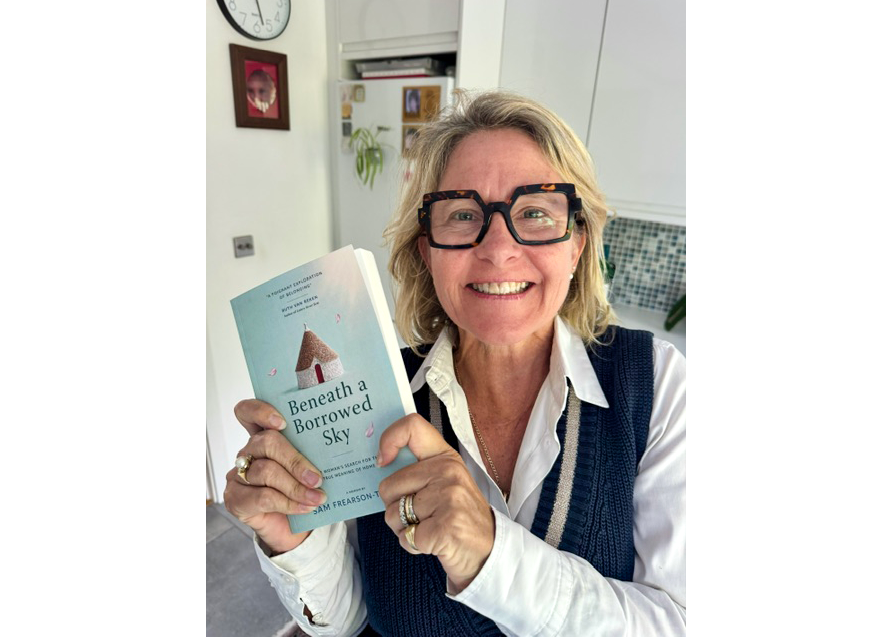
What made you want to write Beneath a Borrowed Sky, and what did writing it teach you that living it had not?
I began writing it for my children. I wanted them to understand where I had come from, beyond the list of countries, and how my childhood had shaped the mother I became. Raising four children across cultures also made me look more closely at my own experience as a Third Culture Kid.
Living it, I was usually occupied with whatever came next: another move, another school, another goodbye. Writing required me to stop and consider what those experiences had meant.
I began to see connections between my childhood and my adult need to gather people, build friendships and create community. I could also recognise losses I had previously brushed aside because moving was simply what we did.
Writing didn’t resolve every question about belonging. It gave me a better understanding of why those questions mattered so much to me, and it helped me put into words things I had carried for years.
Writing the book also led to something I hadn’t anticipated: founding Wandering Identity Writing Retreats in Puglia. Having experienced how much courage writing takes, and how valuable the right support can be, I wanted to create that opportunity for others. Bringing people together around writing, food and conversation feels like a natural extension of everything I’ve learned about creating a sense of belonging.
You and your Italian husband have raised four children across many countries. Which parts of your own childhood did you want them to have, and which did you hope to spare them?
I wanted them to have the curiosity that comes from encountering different ways of living. To hear other languages, build friendships across cultures and understand that the way things are done at home is only one possibility among many.
I also wanted them to feel secure within our family, even when their surroundings changed. Having experienced boarding school myself, being together mattered enormously to me.
What I hoped to spare them was the feeling that sadness about leaving should be quickly packed away. I wanted them to know they could appreciate a new country and still miss the old one.
Of course, understanding these things doesn’t mean you always get them right as a parent. Looking back, I can see that my own familiarity with moving may sometimes have made me underestimate how difficult it was for them. That is part of the honesty I wanted to bring to the book.
Fifteen countries and twenty-one cities means a great many goodbyes. How do you leave a place and its people behind, and how do you begin again somewhere new?
You might imagine I would be an expert by now, but goodbyes haven’t necessarily become easier. Sometimes another departure brings earlier ones back to the surface.
I’ve learned that friendships need attention if they are going to survive distance: checking in, making time and continuing to show up for each other after everyday proximity disappears.
Beginning again usually means finding ways to participate. I join international associations, bring people together and start book clubs. Those things give some shape to an unfamiliar place.
But I also get tired of starting over. There is effort behind the apparent ease of someone who has moved often. These days, I’m more willing to acknowledge that and give myself time.
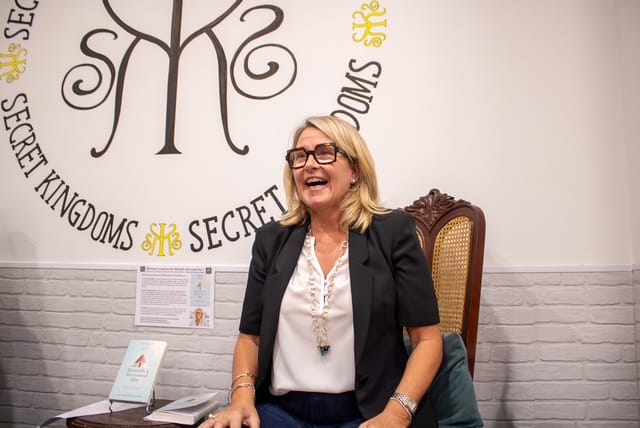
Wherever you have moved, from Modena to Madrid, you have started a book club, and you now run the first global book club for Families in Global Transition. What happens when we talk about a book together that doesn’t happen when we read alone?
When we read alone, we bring our own experiences to the page. When we discuss a book, we discover how differently someone else has understood the same character, decision or sentence. That can be surprising, and occasionally uncomfortable, in a useful way.
A book also gives people a way into conversations they might struggle to begin otherwise. Talking about a character’s loneliness, marriage or sense of displacement can make it easier to share something of ourselves.
I’ve run book clubs in three countries and now lead Roaming Readers, the online international book club for Families in Global Transition. What I love is how a shared reading experience can connect people whose lives look very different.
Over time, the conversation extends beyond the book. People become familiar to one another, trust develops, and a group becomes a community.
Today we can explore almost any corner of the world from our phones, and cities everywhere are starting to look alike. Does it still matter to be somewhere in person, and what can a place teach us that a screen cannot?
Yes, I think it matters enormously. A screen can introduce us to a place, but being there involves all the ordinary, unpredictable experiences that rarely make it into a photograph.
There is the sound of a language around you, the rhythm of a market, the uncertainty of getting something wrong and the kindness of someone helping you. You discover how people spend their days and, gradually, begin to recognise the details you initially overlooked.
In Modena, going to the market and becoming part of local and international communities has helped me feel connected. Those repeated encounters matter: being recognised, having a conversation, knowing someone will notice you.
A screen can maintain a friendship across continents, and I’m very grateful for that. Being somewhere in person gives you the opportunity to become involved in its everyday life.
Who has inspired you along the way? It might be someone in your family, a writer, or a woman you met on your travels. What did they teach you?
Different people have helped me at different stages.
Nancy, my friend in Portland, taught me how to nurture friendship. I had met so many people throughout my life, but she helped me understand the care and consistency that allow a friendship to deepen and endure.
Jo Parfitt, my editor and mentor, helped me find the courage to finish my memoir and share it. She encouraged me, challenged me and kept me moving when self-doubt threatened to take over. Having someone take your writing seriously can help you begin to take it seriously yourself.
My children inspire me too. They are building lives in different parts of the world and making choices that are their own. Watching them reminds me that, however much experience I have of moving and adapting, I still have plenty to learn.
Find out more about Sam and her work at wanderingidentity.com.
Photos courtesy of Sam Frearson-Tubito.