
Culture — Global
What Moving to the U.S. Taught Me About Swedish Parenting Culture
Linda Åkeson McGurk never felt like an outsider in America until she became a mother. On leaving Sweden, raising two daughters in rural Indiana, and why parenting norms don't travel.
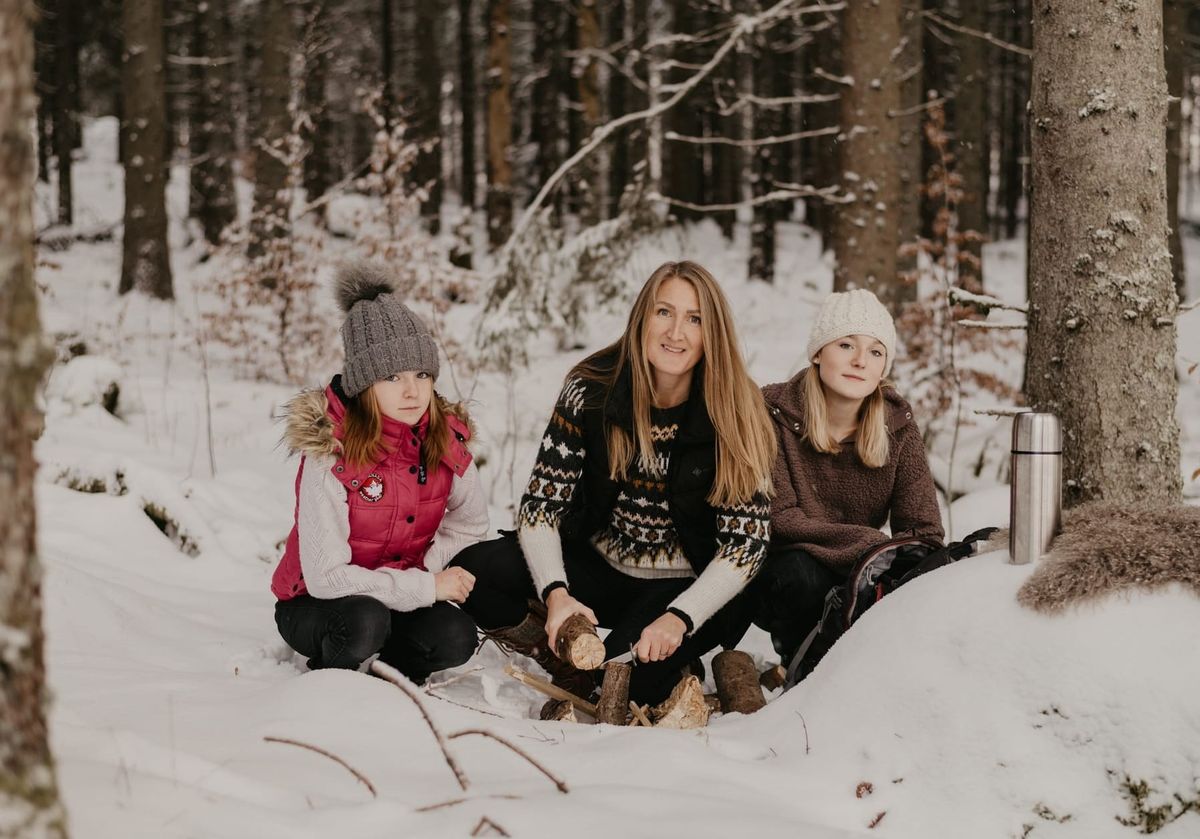
There are a few principles about childhood in Sweden that are non-negotiable. A child’s right to play means that worksheets and flashcards are a no-no at preschool. The idea that sweets are only eaten on Saturdays has resulted in the concept of lördagsgodis. Bodily integrity is king and corporal punishment has been banned since the 1970s. And, thanks to the culture of friluftsliv – open-air life – children are expected to play outside daily to grow a strong connection with nature.
When I moved to the U.S. in my twenties, I hadn’t reflected much on how my Swedish upbringing had shaped me and definitely had no idea that it would eventually result in a book. I didn’t even think of the move as a big shift. In Sweden, where I was born and raised, American culture is everywhere: the food, fashion, music, movies, celebrities and politics. I spoke fluent English and knew more about the history of Native Americans than about Sweden’s own Indigenous people, the Sámi (which probably says more about the shortcomings of the Swedish national curriculum than about me). While there were aspects of life in my new homeland that I didn’t understand – the healthcare system, bank drive-up lanes, and supersize sodas – I felt as American as apple pie.
Until I became a mom.
My oldest daughter, Maya, was born in rural Indiana in February, and when she was about two weeks old, I did what generations of Swedes had done before me. I took her outside for a walk in the stroller, and when she fell asleep, I left her on the back porch and went back inside. In Sweden, letting babies nap outdoors year round is seen as key to good health and a sign of respectable parenting. In the U.S., it could get you reported to Child Protective Services – or even arrested.
When people in our hometown saw me outside with Maya in the winter, some called me brave. Others thought I was reckless. In a case of Midwestern nice meets Scandinavian resilience, a third group took pity on us and offered us rides. As Maya got older, the culture clash deepened. At preschool, she was drilled with wall words, worksheets and homework, at the tender age of four. Once she entered kindergarten, recess was often canceled due to the weather and questioning the rules got me nowhere. The playgrounds were empty and the children stuck indoors, in front of screens.
Parenting norms, it turns out, don’t travel.
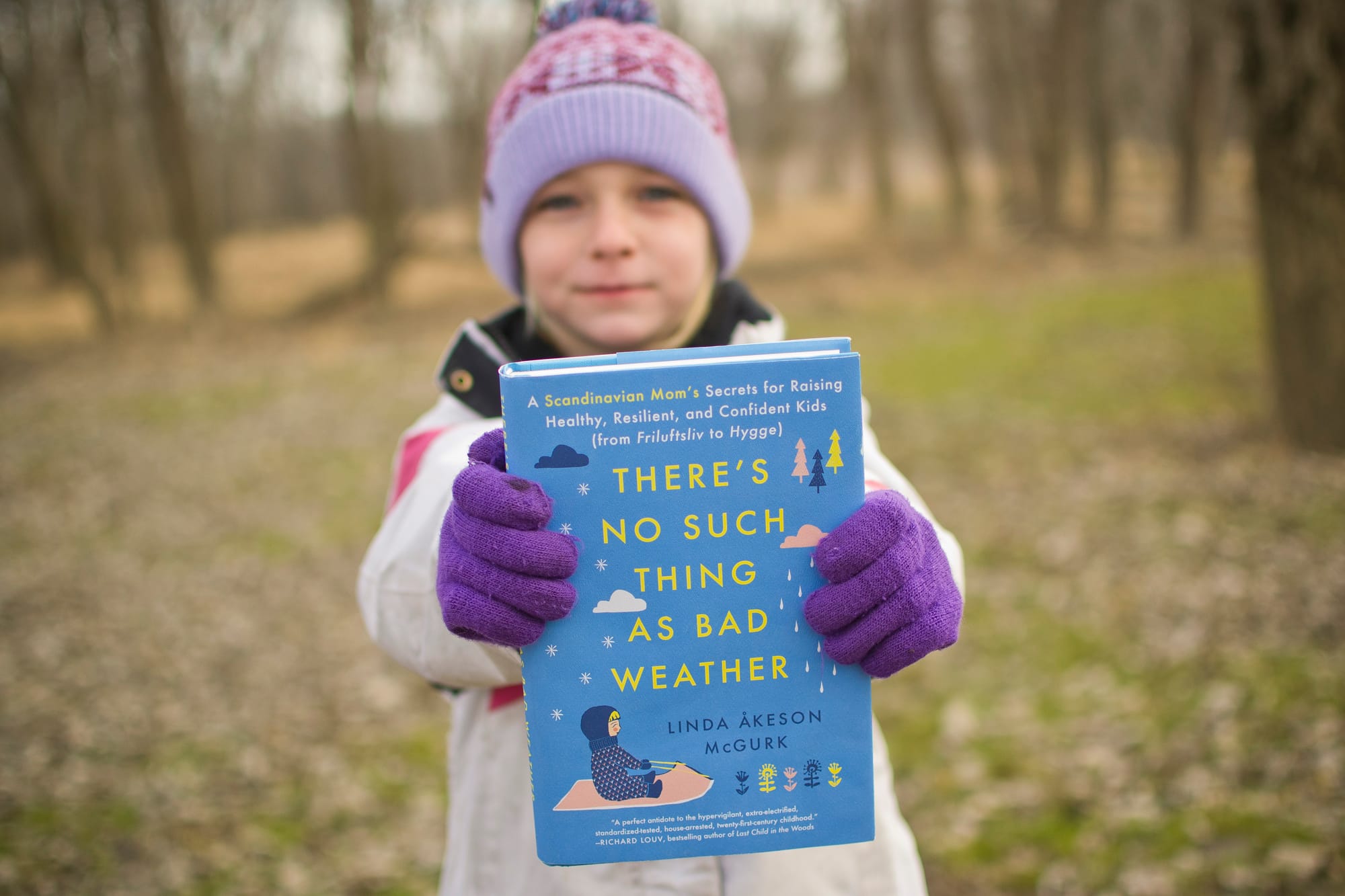
When Maya was three, her little sister Nora was born, and I realized that if my daughters were to have the worm-digging, creek-wading, tree-climbing, fort-making, snowman-building, mudpie-baking childhood that I had hoped for, I needed to become even more intentional about taking them outside. The old Scandinavian adage “There’s no such thing as bad weather, only bad clothes!”, which I’d always rolled my eyes at as a child, became my rallying cry. Leaning into my Swedish friluftsliv heritage, I started a blog chronicling our adventures. When an editor at a publishing house reached out a couple of years later to ask if I’d ever considered writing a book, I knew I had a story to tell.
With “There's No Such Thing as Bad Weather: A Scandinavian Mom's Secrets for Raising Healthy, Resilient, and Confident Kids (from Friluftsliv to Hygge),” I was hoping to start a conversation about culture, parenting, and what we lose when children grow up disconnected from nature. To write the story, I took Maya and Nora to Sweden for nearly six months and enrolled them in preschool and school. Through Swedish forest schools, muddy play dates, and scout outings with sharp knives, the book makes the case for a wilder, freer childhood.
I wanted my book to inspire other parents and caregivers who, like me, felt like something had gone wrong. What I didn’t expect was to find a community.
Because when I told my story, other parents reached out to tell me theirs. The father who turned to me for advice on how to dress his daughter for winter, after being told by relatives he should just keep her inside. The mother who told me that going on walks in the neighborhood with her two young boys had helped them create core memories together, even though money was tight. The educator who had been inspired to start a Scandinavian-inspired forest school in Montana after reading my book.
They hadn’t grown up in Sweden, but they shared the same feeling of loss that I had felt in a culture where children in nature had become an endangered species. Where fears about the weather, injuries, traffic, strangers, lawsuits, and falling behind academically had gradually curtailed children’s freedom to play outdoors until the only place considered safe enough was within the confines of four walls. Soon, smartphones and social media filled the void and accelerated the retreat indoors.
If there was one thing I learned after moving to the U.S., it’s that you sometimes have to leave home to understand where you came from. I didn’t know that spending time outside every day was a value I believed in until I was fighting for it on the other side of the Atlantic, and in the years after my book was published, I discovered that many others felt the same longing. I hadn’t expected it, but I shouldn’t have been surprised. Because while friluftsliv is a Nordic concept, our need for nature is universal. If There’s No Such Thing as Bad Weather leaves any lasting mark, I hope it is simply this: a nudge to open the door and go outside, rain or shine, no matter where in the world you’re raising your children.