
Ever since we came out of the fields and into the towns and cities, life has become progressively more about how productive we can be.
And always there have been threats to our jobs. The cotton gin; industrialisation; the production line; time and motion studies; the robots that came in during the 1980s. The latest is Artificial Intelligence. And yet today more people are in work than ever before. So maybe we need to chill out and ignore the doom mongers.
But there’s something else to consider. Maybe life doesn’t have to be a treadmill. What if we could find a way to keep a roof over our heads and food on the table and still indulge our playful, creative side?
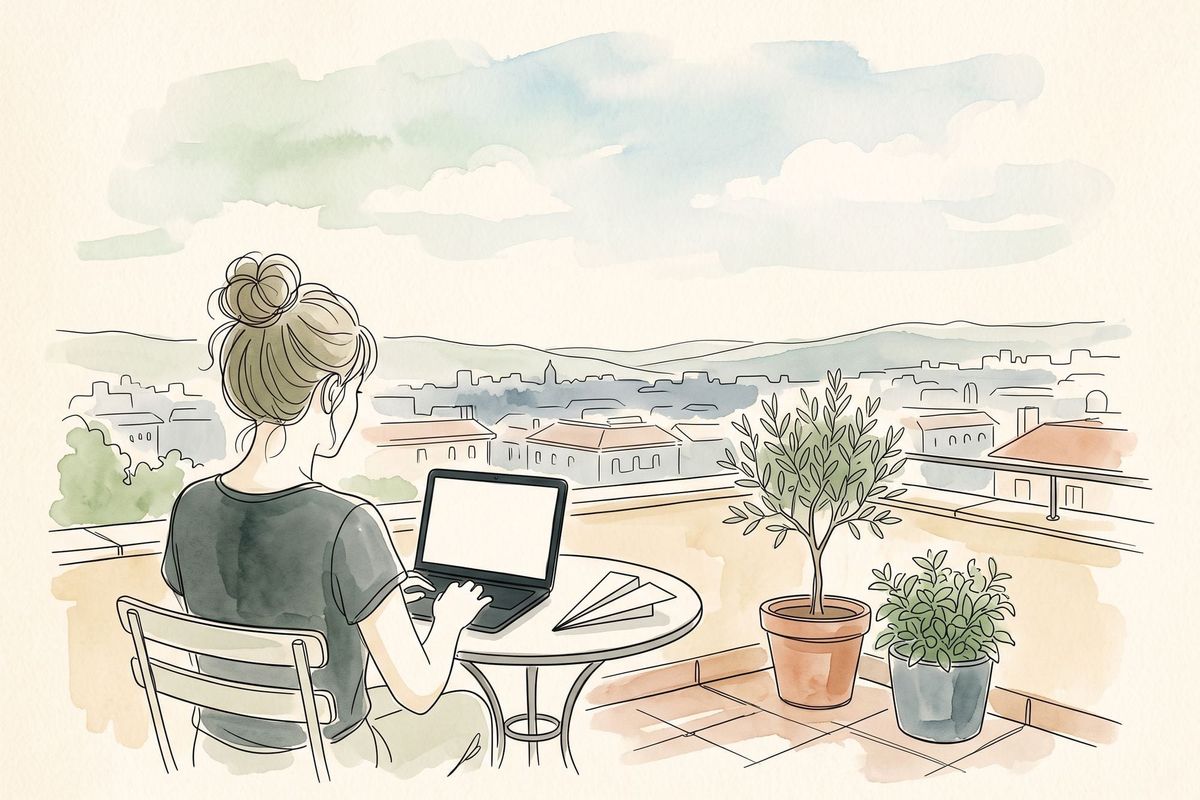
Have you seen Google’s new offices in London’s King’s Cross? That’s them, at the top of the page. Note the roof garden. And if you could look through the windows, you might see something like this.
In fact, in every hi-tech office I’ve visited in the past 15 years, increasingly play has become integral. First it was table tennis and darts. Then it was rollerskating and skateboard paths. Now, it’s the apparent playground that is Google.
There’s a serious fly in this ointment though. The education system in the UK (and most likely elsewhere in the western world) is resolutely stuck in the 1980s. And yet the jobs that were available in the 80s are disappearing. Many of the jobs available today barely existed 15 years ago. Do we imagine that is a trend that is miraculously going to reverse itself?
So we need a revolution in education. To work in the digital world requires a number of skills. Paramount among them is creativity. How do you teach creativity? Finland has a curriculum that puts a big emphasis on music, the arts, and outdoor activities. The country has been doing this since the late 70s. And yet it topped the international PISA rankings in, of all subjects, science, in 2006, and its students still perform well above the OECD average.
Despite this, in 2016 Finland updated its already successful system. Subjects were not scrapped, as was widely reported at the time, but every school must now include periods in which classes study a topic (such as climate change), applying all the attendant relevance of maths, history, geography and science.
Without pre-judging whether this new system works (Finland’s test scores have slipped since I first wrote this, as they have across much of the developed world, so the jury is still out), it is obvious that it requires and induces creative thinking on the part of the students. Understanding why maths is important might well reverse the trend (particularly in the UK) of avoiding the subject like the plague. Over time, this has led to a dearth in the UK, particularly at Primary School level, of qualified maths teachers. Ditto the sciences.

Teaching the teachers
So where’s the problem? In the UK, the problem lies in the teaching profession. Many of today’s teachers were themselves taught in a system where standards slipped, particularly in English and maths. It stands to reason that if you weren’t taught English properly, your ability to teach it is compromised. Ignoring correct grammar and punctuation and not bothering about spelling – all in favour of ‘expressing yourself’ – has taken literacy standards backwards. And, just to be clear, I’m not saying fewer people can read and write. I’m talking about the ability to comprehend what one is reading. According to the National Literacy Trust, one in six adults in England (6.6 million people) has very poor literacy skills, meaning they struggle with longer texts and unfamiliar topics.
But even more problematic is how we teach coding, and indeed anything about digital engineering. Computing has been compulsory in English schools since 2014, but there have never been enough teachers qualified to teach it. The answer to that is to involve the global giants of the digital world in our school curriculum.
And we need to retrain our teachers, overhaul the entire education curriculum. We need to start teaching our children to think, to play, to be creative. Above all, we need to reintroduce the concept of critical thinking. We have spent several generations teaching children WHAT to think, rather than HOW to think.
They need to look forward to a world where work could be fun, not an imposition. A world where their efforts might positively impinge, through the work they are involved in, on future generations.
Certainly a world where there are no more ‘dark satanic mills’ (William Blake’s image of the factories of the Industrial Revolution), or Thomas Gradgrind figures (Gradgrind is an educator in Charles Dickens’s 1854 book Hard Times) forcing them into mind-numbing boredom just to put food on their table.
Sources
• Pasi Sahlberg, “Finland’s school reforms won’t scrap subjects altogether”, The Conversation, 25 March 2015: https://pasisahlberg.com/finlands-school-reforms-wont-scrap-subjects-altogether/
• University of Jyväskylä, “PISA 2025: Students in Finland still perform well above OECD average in science”, 8 September 2026: https://www.jyu.fi/en/news/pisa-2025-students-in-finland-still-perform-well-above-oecd-average-in-science
• National Literacy Trust, “Adult literacy rates in the UK”: https://literacytrust.org.uk/parents-and-families/adult-literacy/
• The Royal Society, Policy briefing on teachers of computing: recruitment, retention and development, 2019: https://royalsociety.org/-/media/policy/publications/2019/21-08-19-policy-briefing-on-teachers-of-computing.pdf